Sizing in Online Shops: These Tips Boost Conversion Rates
Sizing is a critical factor for online shops. Learn how digital solutions can reduce uncertainty, lower return rates, and boost sales.

Thomas Hahn
Freier Journalist
 imgeditor.co
Here's what you'll learn in this article
- Why sizing is one of the biggest drivers of conversion in online stores
- What unique challenges sports equipment presents compared to other categories
- How clear sizing recommendations reduce uncertainty and speed up purchasing decisions
- Why digital tools like Smartfit are revolutionizing online advice
- How precise sizing reduces returns and increases customer satisfaction in the long term
- Why sizing in online stores determines success or failure
The most critical aspect of the online shopping process is often an overlooked one: choosing the right size. If this hurdle isn’t overcome, even the most attractive product will be left in the shopping cart. This is precisely where it’s decided whether interest turns into a purchase—or whether uncertainty prevents the conversion.
Sizing is therefore one of the biggest challenges in e-commerce. Customers can neither try on products nor directly experience how they feel. Instead, they make their decision based on limited information—and it is precisely this uncertainty that leads to abandoned carts and returns.
The good news: there are ways to improve online sizing and, consequently, the conversion rate. Below, we’ve compiled five tips to help you reduce uncertainty and guide your customers confidently toward the right decision.
Why sizing sports equipment is particularly challenging
Sizing for sports equipment like bicycles is significantly more complex than in many other product categories. While clothing often varies only in terms of comfort and fit, size directly affects the function, performance, and safety of sports products. With bicycles, for example, frame size also determines riding position, control, and efficiency.
Similar effects apply to skis or running shoes. At the same time, sizes vary considerably depending on the manufacturer and model, making it difficult for customers to assess these differences online. Without clear guidance, uncertainty arises—and it is precisely this uncertainty that often leads to abandoned purchases or wrong purchases. Precise sizing is therefore not a minor detail here, but a central prerequisite for purchasing decisions.
Tip 1: View sizing as an active conversion driver
Many online stores still treat sizing as nothing more than a mandatory field. Yet it is a pivotal moment in the customer journey. This is exactly where it’s decided whether uncertainty arises—or trust. Because when customers are confident they’ve chosen the right size, their behavior changes. They make decisions faster, abandon their carts less often, and proceed through the checkout process with a better feeling. Sizing thus becomes an active tool for improving the conversion rate.
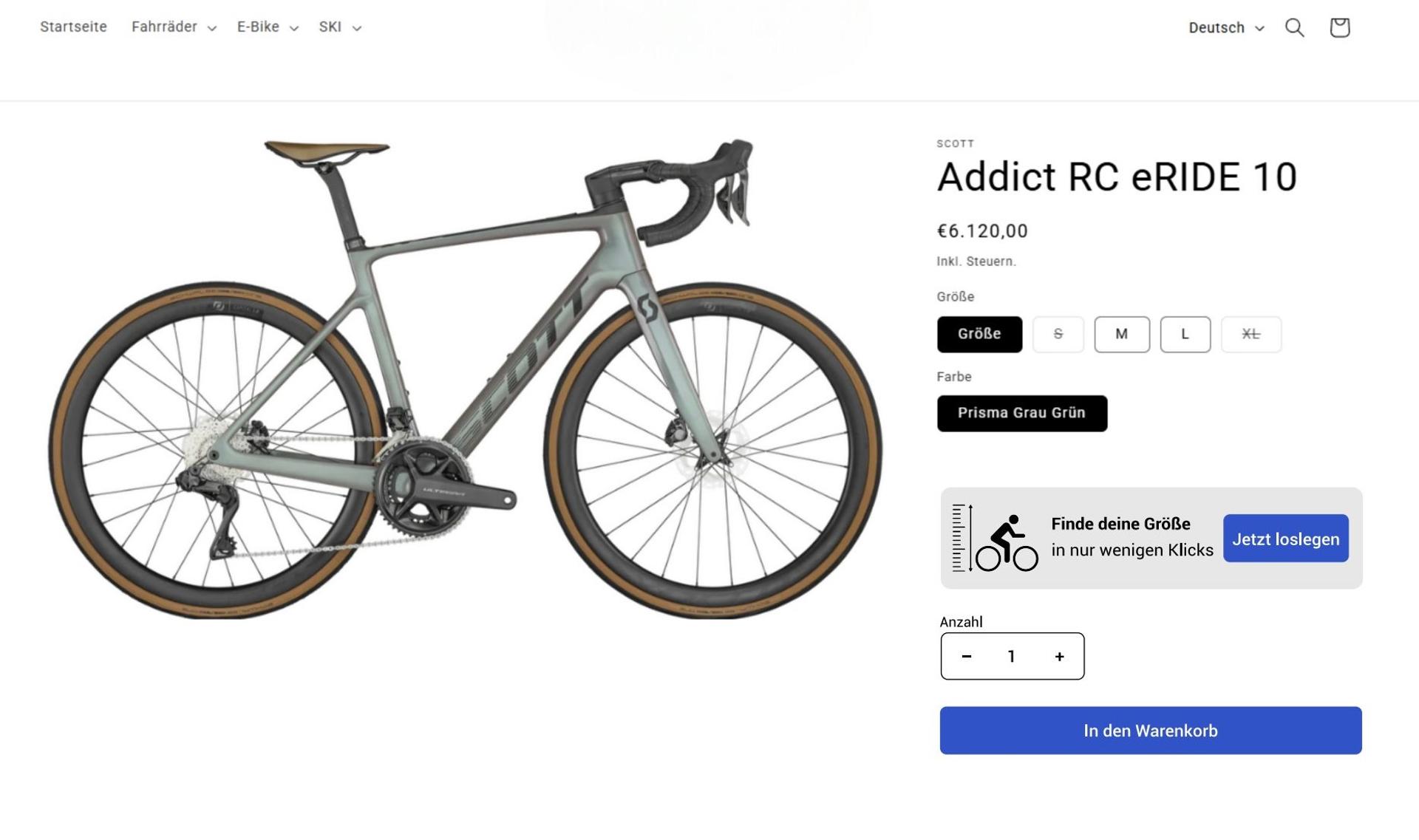
Online stores should therefore not relegate sizing guides to the margins, but rather treat them as an integral part of the product page. Clear recommendations, easy-to-understand explanations, and intuitive user guidance help reduce uncertainty and make the purchasing decision easier.
Tip 2: Clear sizing recommendations instead of just size charts
Traditional size charts are still standard in many online stores. They list body measurements, frame sizes, or general categories like S, M, and L. But that’s exactly where the problem lies: charts provide data, but they don’t help customers make a decision. Customers have to interpret the information themselves—and that creates uncertainty.
A clear, specific size recommendation is far more effective. Instead of just showing measurements, the store should actively communicate which size fits best. A phrase like “Recommended size for you: M” reduces mental barriers and builds trust. Customers no longer feel left to fend for themselves, but rather guided.
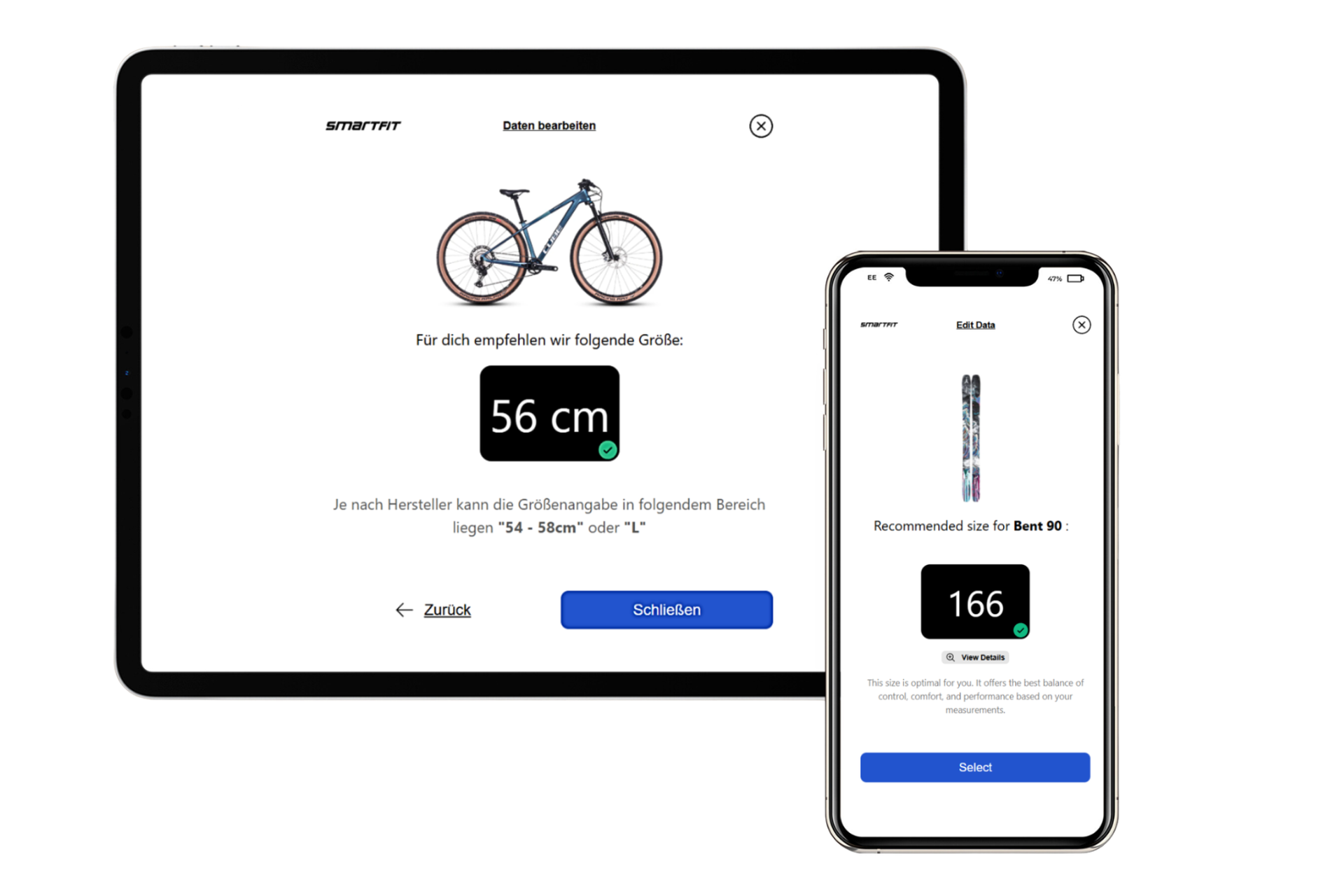
This difference is particularly crucial when it comes to bicycles. Different frame geometries, individual body proportions, and varying intended uses make choosing the right size a complex process. A clear recommendation simplifies the decision and increases the likelihood that customers will complete the purchase.
Tip 3: Transparency and clarity
For many customers, sizing is an abstract concept. Terms like frame size, geometry, or riding position aren’t always self-explanatory. The more complicated the explanation, the greater the uncertainty.
That’s why it’s crucial to present complex information in an understandable way. Instead of technical specifications, retailers should explain the specific effects of a particular size. How does the bike feel? Is the riding position more sporty or comfortable? Which size suits which riding style?
Digital sizing technologies like Smartfit Software 3.0 translate complex geometry data into clear recommendations. They make it clear which size fits the individual’s body structure—and replace abstract values with concrete guidance. This transparency reduces doubt and makes the purchasing decision easier.
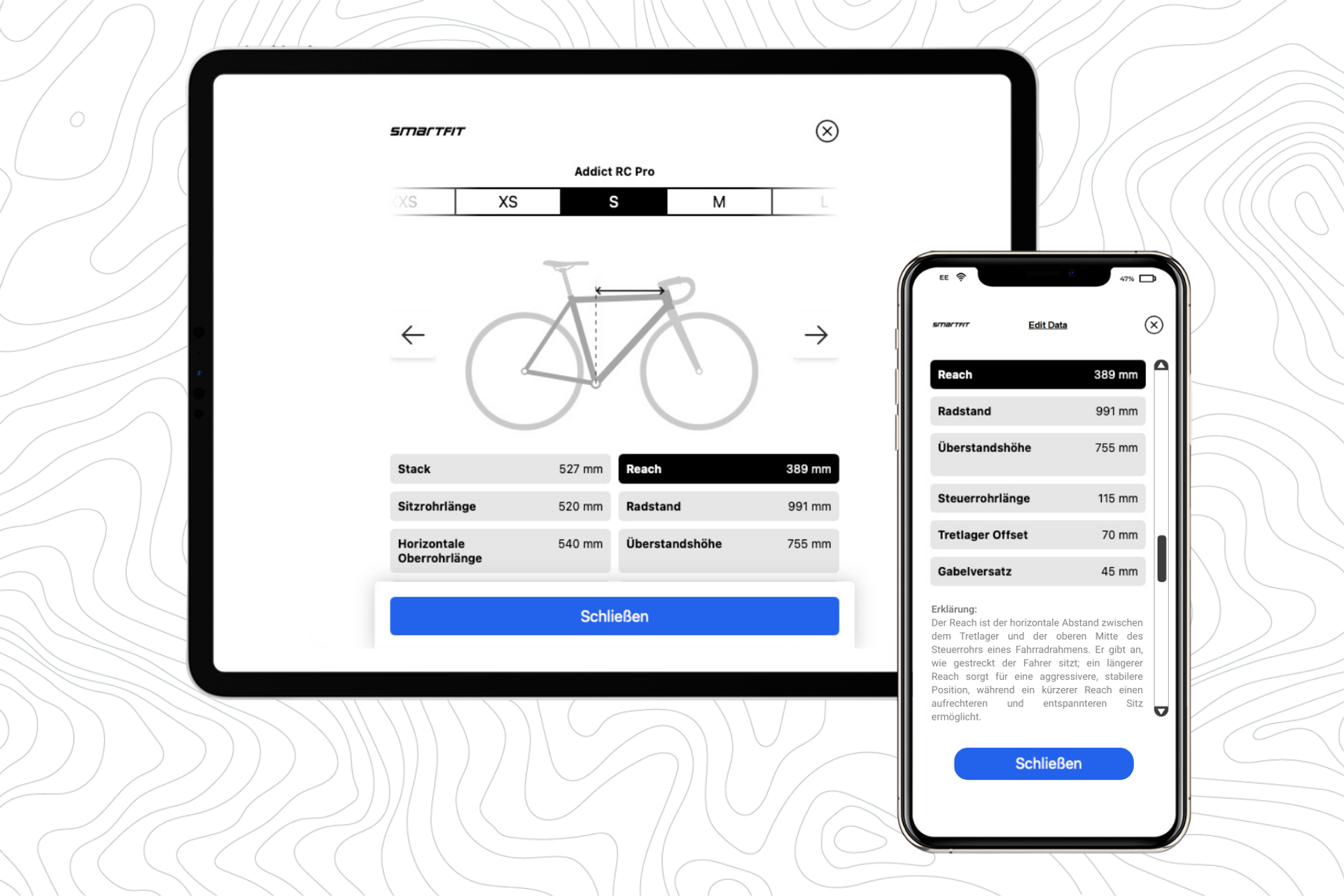
Tip 4: Digital sizing guidance directly during the purchasing process
The biggest driver of conversions lies directly on the product page. This is exactly where the decision is made—or postponed. An integrated size guide can positively influence this critical moment. Digital solutions help here as well: they analyze body measurements and compare them with the product’s geometric data. Based on this, a personalized size recommendation is generated that is significantly more precise than general size charts.
The key advantage lies in user guidance: customers don’t have to interpret or research on their own, but instead receive a direct, easy-to-understand recommendation. This form of digital guidance reduces uncertainty and builds confidence in the purchase decision. For online stores, this means fewer abandoned carts, higher conversion rates, and a better user experience.
Tip 5: Real-world benchmarks and social orientation
People rely heavily on the experiences of others when making decisions. This principle can be effectively applied to sizing. When customers see which size others of similar height have chosen, they immediately feel more confident.
Specific comparison values displayed directly on the product page are particularly effective. Notes such as “People who are 178 cm tall usually choose size M” or “This model runs slightly large” help make abstract sizes more tangible. Customer reviews that include information on height and the frame size chosen also provide valuable guidance.
This form of social validation is more effective than purely technical data. It translates sizes into real-life situations and reduces mental uncertainty during the decision-making process. Customers can better assess their own needs and feel more confident in their choice.
Conclusion: Precise sizing is a direct driver of higher conversion rates
Our overview shows that sizing is far more than just technical information—it’s a pivotal moment in the purchasing process. This is exactly where customers decide whether to trust the product or feel uncertain. If you can make the sizing process clear, transparent, and intuitive, the mental barrier is lowered and the likelihood of a purchase increases significantly.
This effect is particularly pronounced with sports products such as bicycles, skis, etc. Here, the right size influences not only comfort but the entire training experience. Online stores that actively support their customers in this decision provide guidance—and create a competitive advantage for themselves. After all, those who use sizing strategically can increase conversion rates, reduce returns, and sustainably improve customer satisfaction.