Between two frame sizes: What you should pay attention to
Sporty or comfortable? Our guide shows you what to look out for when buying a bike if you are exactly between two frame sizes.

Thomas Hahn
Freier Journalist
 imgeditor.co
Do I need a 56 frame? Or should I go for a 58 instead? And why doesn't the manufacturer offer a 57 cm frame size? If you're torn between two frame sizes, deciding which bike to buy can be a real headache. Both options sound plausible, both could be a good fit – and that's exactly what makes it so challenging. Ultimately, the right size determines how comfortable you will feel later on, how stable the bike will be, and whether you can truly enjoy every kilometer.
As simple as the numbers may seem at first glance, there is much more to them than just the height and length of the frame. Even small differences can affect posture, control, power transmission, and safety on the road or off-road. In addition, hardly anyone fits the “standard person” that manufacturers base their tables on. Are you long-legged? Do you have a longer torso? Do you want to ride aggressively or relaxedly? This is exactly where it becomes clear why a seemingly small decision can make a big difference in the long run.
Bicycle frame size: Height isn't everything
Your height alone rarely tells the whole story. What matters is how your height is distributed between your legs and upper body. People with long legs quickly end up sitting too low on a bike with a frame that is too small and are often better off with a slightly larger size so they don't have to sit too stretched out. If, on the other hand, you have a long upper body, a smaller frame can give you a sporty, powerful posture without being uncomfortable.
Important to know: Many things can be fine-tuned later. A slightly longer or shorter stem, spacers under the stem, or a slightly altered saddle position can make adjustments that make the difference between “fits okay” and “feels perfect.” The frame size is the basis—but it doesn't have to determine every detail.
Cycling style has a big impact
 imgeditor.co
If you are between two sizes, there is a basic rule that can help you immediately: the smaller frame provides a slightly sportier, more dynamic riding position because the handlebars are lower and you are leaning further forward. On a larger frame, you sit more upright and relaxed, and you have a better overview and more comfort, especially in the city or on long tours. Both can be right – it simply depends on what you want for your rides.
 imgeditor.co
The riding experience also changes. A smaller frame makes the bike shorter and therefore more maneuverable. Cornering, quick changes of direction, playful handling—everything feels more direct. The larger frame, on the other hand, rides noticeably more smoothly and stably, especially when you're carrying luggage or love high speeds. Those who ride a lot downhill or enjoy long stretches of country roads often benefit from this smooth ride.
Which bike are you actually buying?
 imgeditor.co
The type of bike also plays a role. A classic example is when you are torn between two sizes for a road bike. Road bikes are designed for sportiness—many riders feel more comfortable on the smaller size because it is easier to get into an aerodynamic position. The situation is similar with gravel bikes. The difference is that gravel bikes are often chosen for comfort and control, which tends to favor the larger option.
When it comes to mountain bikes, the decision between two frame sizes depends largely on your personal style. If you spend a lot of time on technical trails, a slightly smaller frame can give you more control. For high-speed passages and steep descents, on the other hand, the larger size offers more stability.
And when it comes to city or trekking bikes, the main thing is usually to be able to ride in traffic in a relaxed and clear manner—so the larger and therefore more upright and comfortable option is often the better choice for these bikes.
How to make a confident decision
Perhaps you now have an idea of which size might fit better. But sometimes it remains undecided until the last moment— and that's when professional sizing is worthwhile. So that you don't have to rely on gut feeling or retailer intuition, there are now various aids and tools available to help you make the right decision objectively.
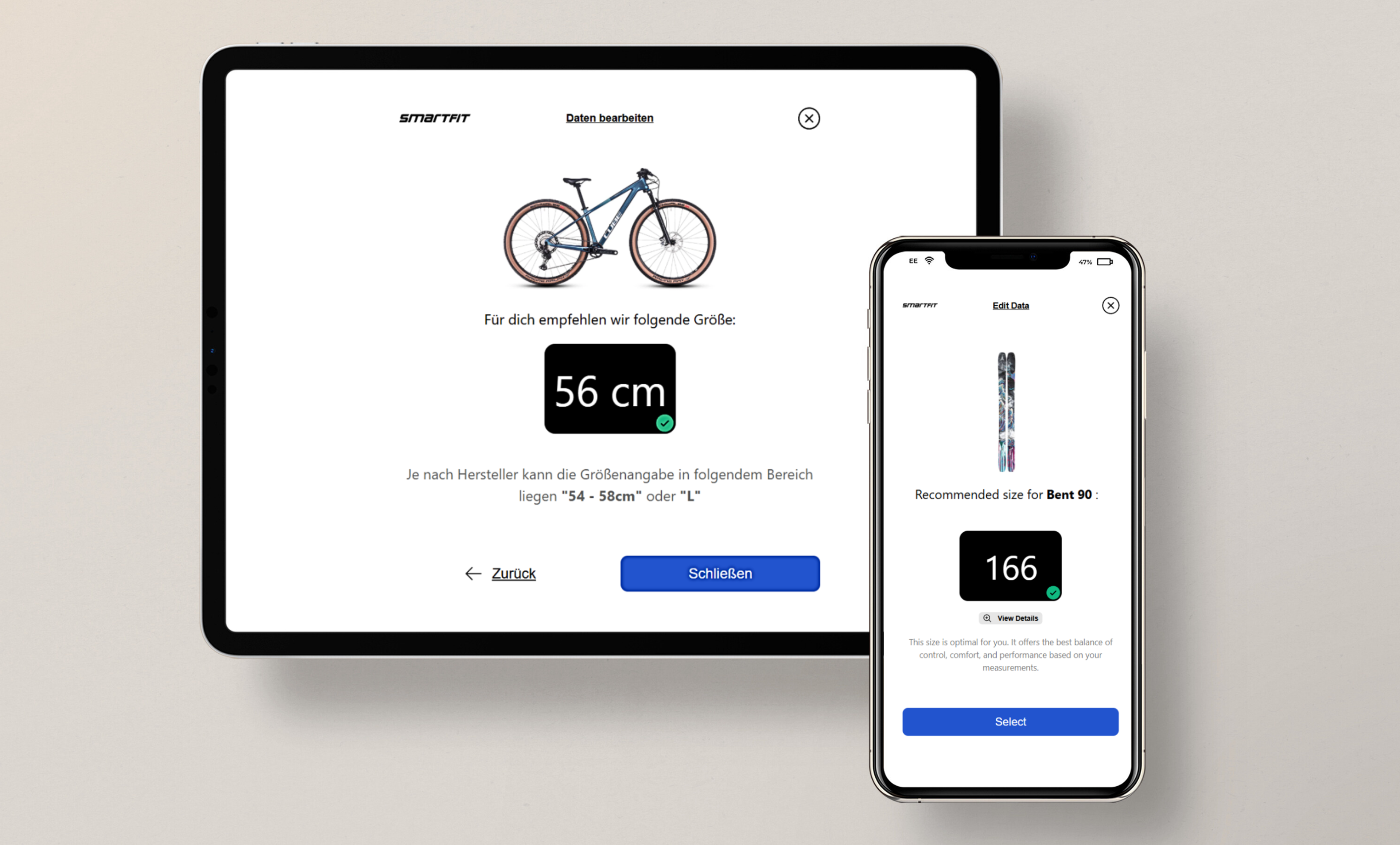
Smartfit offers solutions that are perfectly suited to this. When you shop online, Smartfit eCommerce Sizing helps you directly in the online store—in less than a minute, using only your height or inseam. The result is based on real biomechanical data and gives you the confidence to add the right size to your shopping cart online, without risk and without any doubts later on..
It gets even more precise in specialist shops: retailers with Smartfit in-store solutions measure your body dimensions and can therefore not only tell you which size fits, but also why it fits—and where the alternative size could be problematic. An individual bike fitting also ensures that your seating position is perfectly tailored to your body and riding style. The result: fewer complaints, more efficiency, more enjoyment.

5 steps to finding the right frame size
1. Determine your height and inseam
Your height and inseam are a good starting point—but nothing more than that. Measure carefully to determine the ideal size range.
2. Consider proportions
Long legs? Choose something a little larger. Long torso? Choose something smaller. Your body dictates what feels harmonious.
3. Honestly assess your riding style
Do you want to ride sportily or relaxedly? The seating position and handling change noticeably between two sizes.
4. Consider the type of bike
Road bike, gravel bike, MTB, or city bike: each category has its own requirements that affect the optimal size.
5. Use smart tools – instead of guessing
Find the right size online with the Smartfit Bike Sizing Widget or get precise measurements in the shop with the Smartfit In-Store Tools. A professional bike fitting ensures perfect fine-tuning.
Between two frame sizes: Our conclusion
Whether frame size 56 or 58 – ultimately, it's not about numbers, but how the bike feels for you. That's why it's worth making this decision consciously. Good to know: It's completely normal to be between two sizes – the important thing is to take your needs and your body seriously. Even a few millimeters can make a big difference. The good news is that with modern tools and professional measurements, you can now reliably find out which size really suits you – and enjoy your new bike to the fullest right from the start.