Size Guidance in Online Shops: 5 Mistakes That Cost You Sales
Hidden size charts, vague recommendations, generic tools—errors in online size guidance cost you revenue. Here’s how to do it better.

Thomas Hahn
 ChatGPT
What you'll learn in this article
- Why size guidance is one of the most underestimated conversion levers in e-commerce
- The five mistakes online shops in the sports and cycling sectors repeatedly make
- How these mistakes impact conversion rates, returns, and customer satisfaction
- How you can immediately improve your size guidance using simple methods and smart tools
- The role modern sizing solutions—such as the Smartfit Widget—play in online size guidance
In e-commerce, you can measure almost anything: bounce rates, conversions, add-to-cart rates, and shopping cart abandonment. Yet one key lever is conspicuously absent from most dashboards—despite costing you real money every single day: size guidance. This is a mistake, however, because it is precisely at the moment when customers want to know whether a product fits them that many purchases fall through. They click away, turn to competitors, or—out of uncertainty—order multiple sizes at once, incurring all the associated logistical and financial consequences for you as a retailer.
This problem is particularly acute in the sports and cycling retail sectors. After all, the right size determines not only comfort but also functionality, performance, and safety. Nevertheless, many online shops continue to treat size guidance merely as a mandatory formality—thereby squandering one of the most critical levers for driving conversions. The following five mistakes appear with particular frequency. Those who recognize these pitfalls and address them systematically can achieve a tangible increase in revenue.
1. Relying solely on manufacturer size charts
 ChatGPT
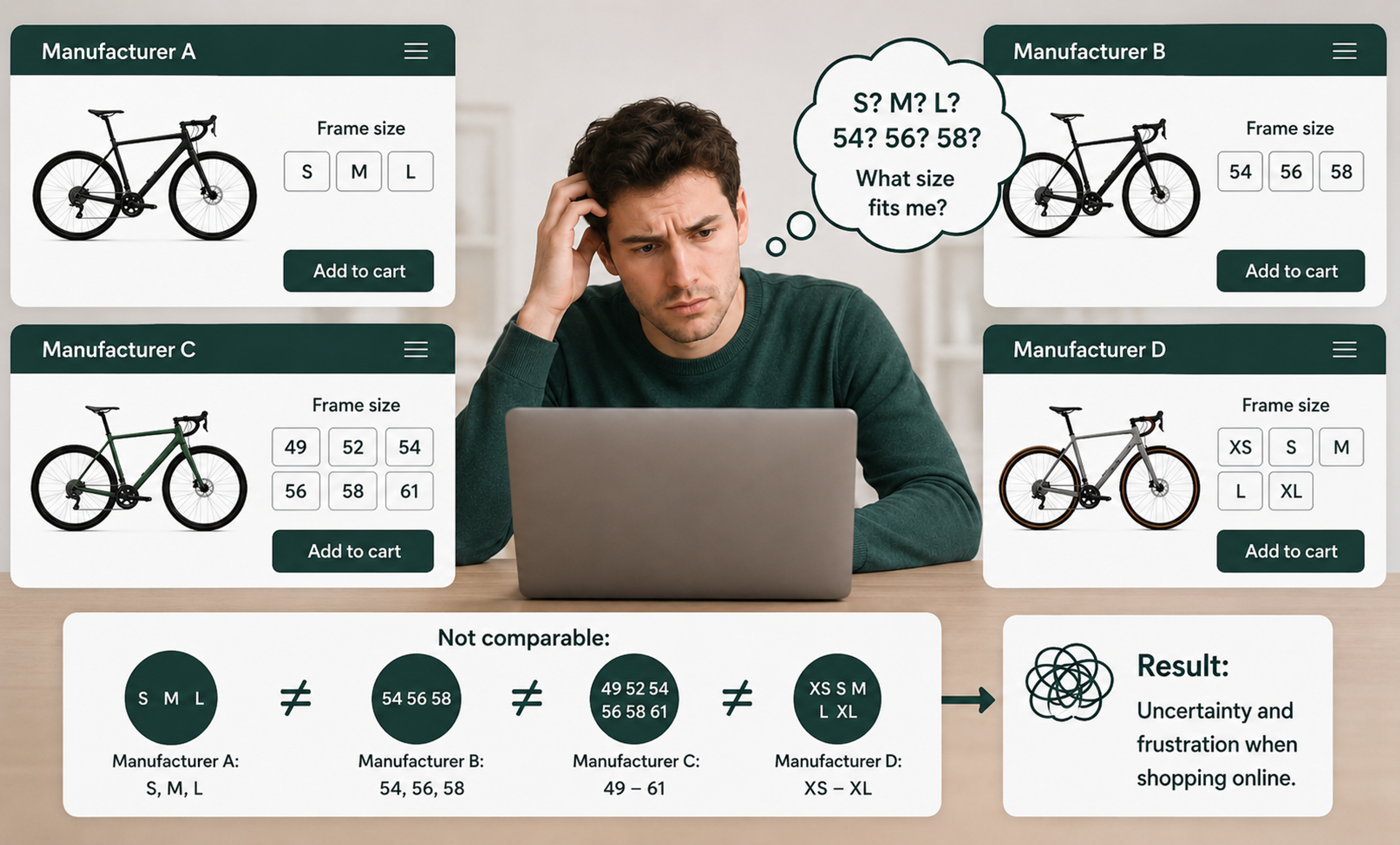
Size charts are among the oldest tools in e-commerce—and, simultaneously, among the weakest. The reason: They provide data, but not a decision. A chart shows what is possible; however, it simply does not tell you what actually fits. This is precisely what many shops leave up to their customers—the very people who have the least experience with geometries, inseam lengths, or riding positions. Furthermore, sizing specifications can vary significantly from brand to brand. What constitutes a size M from Manufacturer A might be labeled an S or an L by Manufacturer B. Those unaware of this fact will, when in doubt, order the wrong size—or choose not to order at all.
Our Smartfit Tip: Instead of a chart, what is needed is a concrete, personalized recommendation. A statement such as "Recommended size for you: 56" carries far more weight than any column filled with abstract measurements.
2. Placing Sizing Advice Too Late in the Funnel
Many shops hide their sizing advice at the very bottom of the product page—or, even worse, delay it until the shopping cart stage. Yet, the decision to purchase is often made much earlier in the process. After all, a customer who begins to feel uncertain while merely scrolling through the product page will rarely make it all the way to checkout. Sizing advice, therefore, belongs at the top of the page—ideally positioned right next to the price or just before the model selection options. Ultimately, it should not be treated as an add-on, but rather as an integral part of the site's navigation.
Our Smartfit Tip: The Smartfit Sizing Widget addresses this very issue: When customers first determine what fits them, they are subsequently able to make a quicker decision regarding the right model. The rule of thumb is simple: The sooner a sense of certainty is established, the higher the likelihood of conversion.
3. Providing Recommendations Without Justification
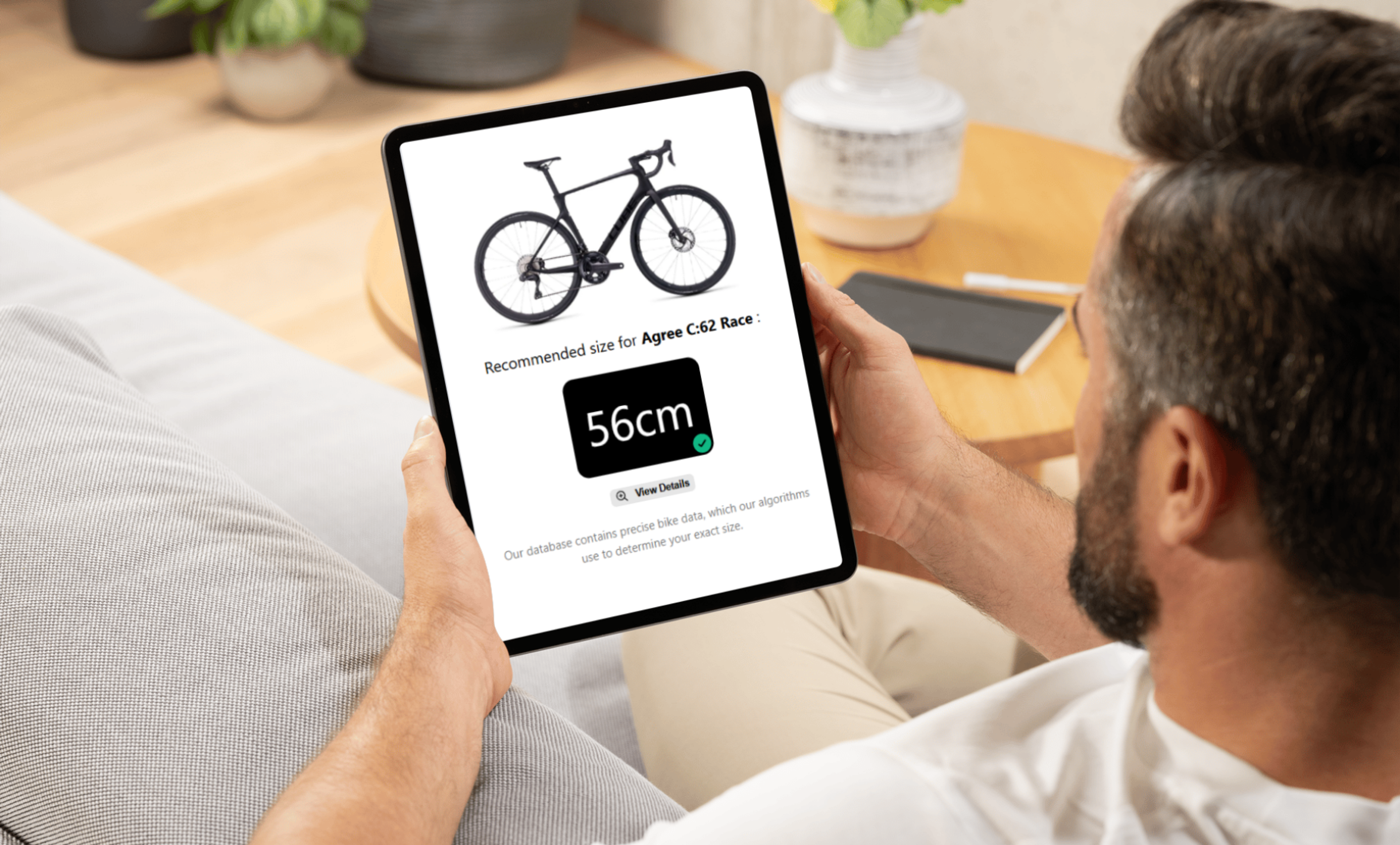
A recommendation without an explanation can quickly appear arbitrary—and may achieve the exact opposite of its intended goal. When a tool simply spits out "Size M," many customers instinctively ask themselves: "Why, exactly? Is this really accurate?" This creates additional uncertainty, particularly for individuals who fall between two sizes. Consequently, transparent sizing tools explain how a recommendation was derived, what factors to consider regarding alternative sizes, and what adjustments remain possible later on. This transparency fosters trust—and in e-commerce, trust is the currency that ultimately determines whether a purchase is completed.
Our Smartfit Tip: By openly disclosing the data and reasoning behind a size recommendation—rather than simply delivering a result—you can significantly set yourself apart from the competition.
4. Using Generic Tools for Complex Products
Standard sizing solutions—originally designed for clothing—quickly reach their limits when applied to sporting goods. While a T-shirt can be forgiving of a few centimeters of leeway, a bicycle or a pair of skis cannot. With bicycles, for instance, frame size influences not only comfort but also efficiency, control, and safety. With skis, conversely, length, weight, and skill level determine stability and agility. Such requirements simply cannot be adequately addressed using a simplistic "three-size" logic. In short: Complex products deserve a recommendation process that does justice to their inherent complexity.
 ChatGPT
Our Smartfit Tip: Anyone looking to consistently improve conversion rates in sports e-commerce needs a biomechanically sound tool that integrates geometry and body data—and delivers precisely the kind of personalized recommendation that standard solutions simply cannot provide.
5. The loss of Collected Data
Every sizing inquiry yields valuable information—about your target audience, their preferences, and their purchasing behavior. Yet, many shops treat this data merely as a byproduct. We believe this is a mistake. After all, knowing which body sizes, genders, or skill levels search for specific products—and at what frequency—enables you to align your product mix, marketing, and seasonal planning with far greater precision. Our Smartfit Insights from the ski sector, for instance, reveal that men utilize sizing tools significantly more often than women, that touring and freeride skis are gaining prominence, and that demand follows a strongly seasonal pattern. Anyone who ignores such data is squandering a genuine strategic advantage.
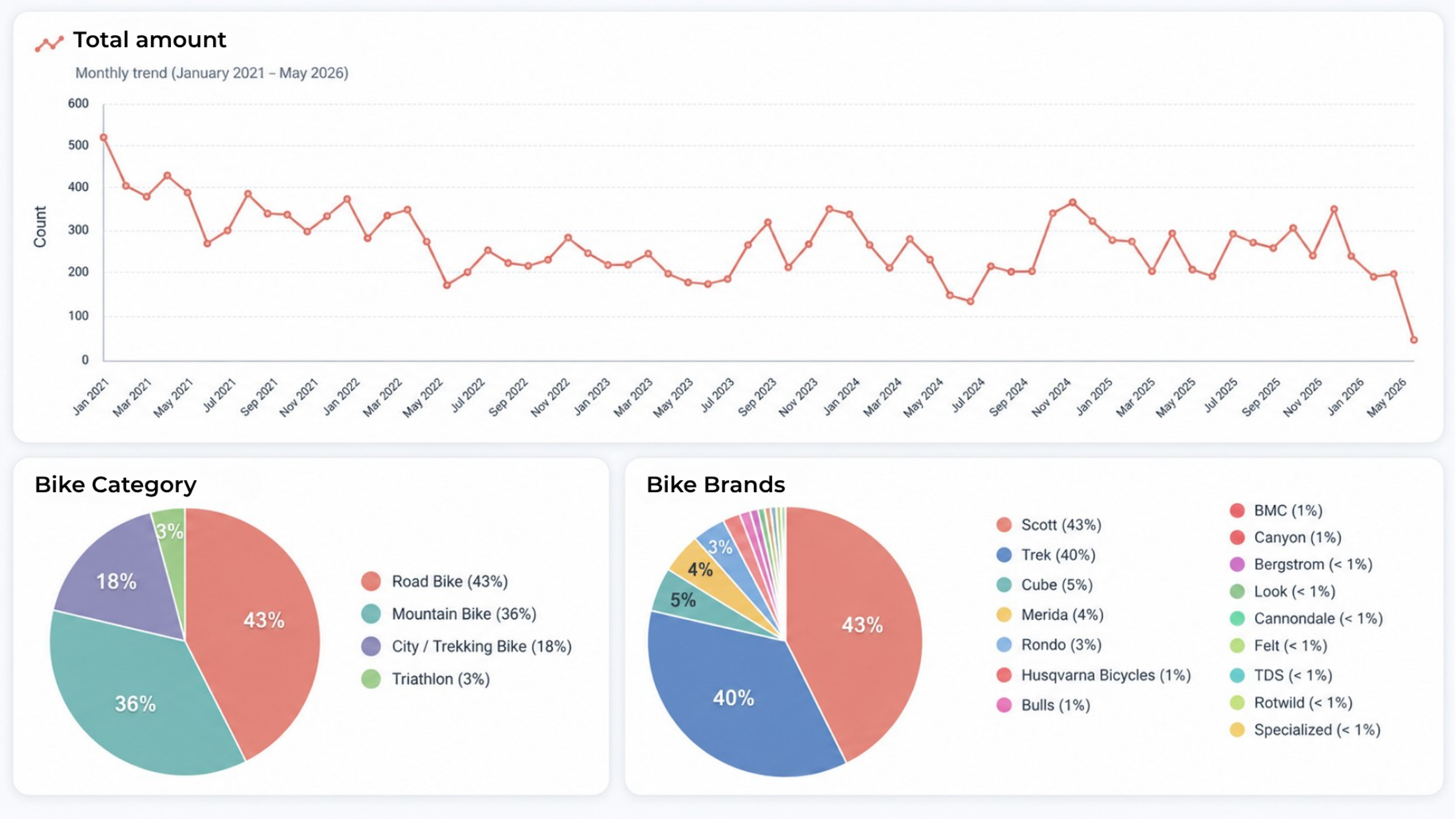
Our Smartfit Tip: Data-specific insights are barely visible in a standard shop backend—yet they are directly accessible via a professional sizing tool. This is precisely where you should focus your efforts.
Conclusion: Turning a Mandatory Requirement into a Strategic Lever
Despite these obvious shortcomings, size guidance in many online shops is still treated as a mere formality—and that is precisely why it is so often executed poorly. Yet, this is the very point where it is decided whether a shop truly understands its customers or leaves them to fend for themselves. Those who replace generic tables with clear recommendations, give sizing guidance a prominent position, provide transparent explanations, utilize sport-specific tools, and consistently leverage the data they gather will elevate their customer guidance to an entirely new level.
The result is fewer abandoned carts, fewer returns, greater trust—and, ultimately, higher revenue. In short: Size guidance is not a tedious detail, but rather one of the most direct levers for boosting conversion rates. Those who fail to utilize it are simply leaving money on the table.