 Photo: Lucky Bike
Data, advice, and trust are crucial for online bicycle purchases
How do you build trust when buying a bike online? With 40 stores in Germany and a strong presence in e-commerce, Lucky Bike guides people on their journey to sustainable mobility. One thing is always at the forefront: orientation, security, and the peace of mind that comes with making the right decision. In this interview, Paul Heinemann and Sergej Kosyrev discuss how Lucky Bike uses online sizing as an integral part of the customer journey, why data-driven advice has become a basic requirement, and how the integration of the online shop and physical stores creates real added value for customers.
 Photo: Lucky Bike
Sergej, Paul, who are you, who is Lucky Bike, and how do you use Smartfit's sizing system?
Paul: I'm a project manager in e-commerce at Lucky Bike, and my responsibilities include digital consultation assistants, online sizing, cross-selling and upselling, as well as expanding our online product range. I've been with Lucky Bike for five years and have actually been familiar with the Smartfit system for over ten years. Sergej heads the e-commerce and online marketing departments at Lucky Bike.
Sergej: Currently, we only use Smartfit in one physical store, namely in Freiburg. Our focus is clearly on the digital channel, i.e., luckybike.de. You've really become a standard, so it made sense to use your system online.
Challenges in online bicycle sales
What do you see as the biggest challenges in selling bicycles online?
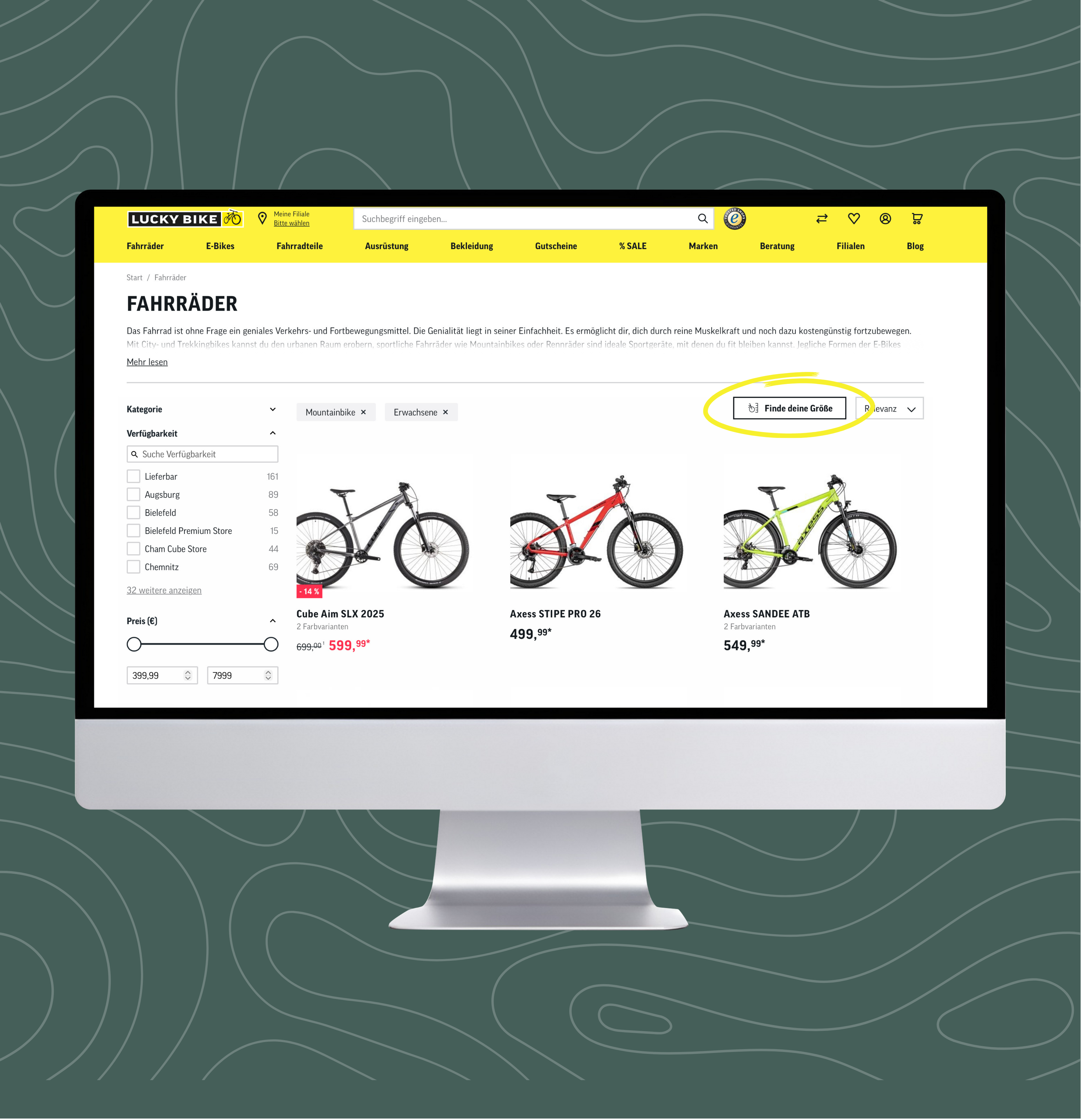
Paul: The biggest challenge is that we can only represent a very tactile product visually online. The feel of a bicycle – how it rides, fits, or feels – has to be conveyed digitally. This is precisely where tools like Smartfit are incredibly helpful: We can give customers data-driven recommendations and instill confidence. This creates a positive feeling about the purchase and supports conversion. Ideally, this also has a positive long-term impact on the return rate.
Do you have any concrete figures, or at least a sense of what has changed as a result of online sizing?
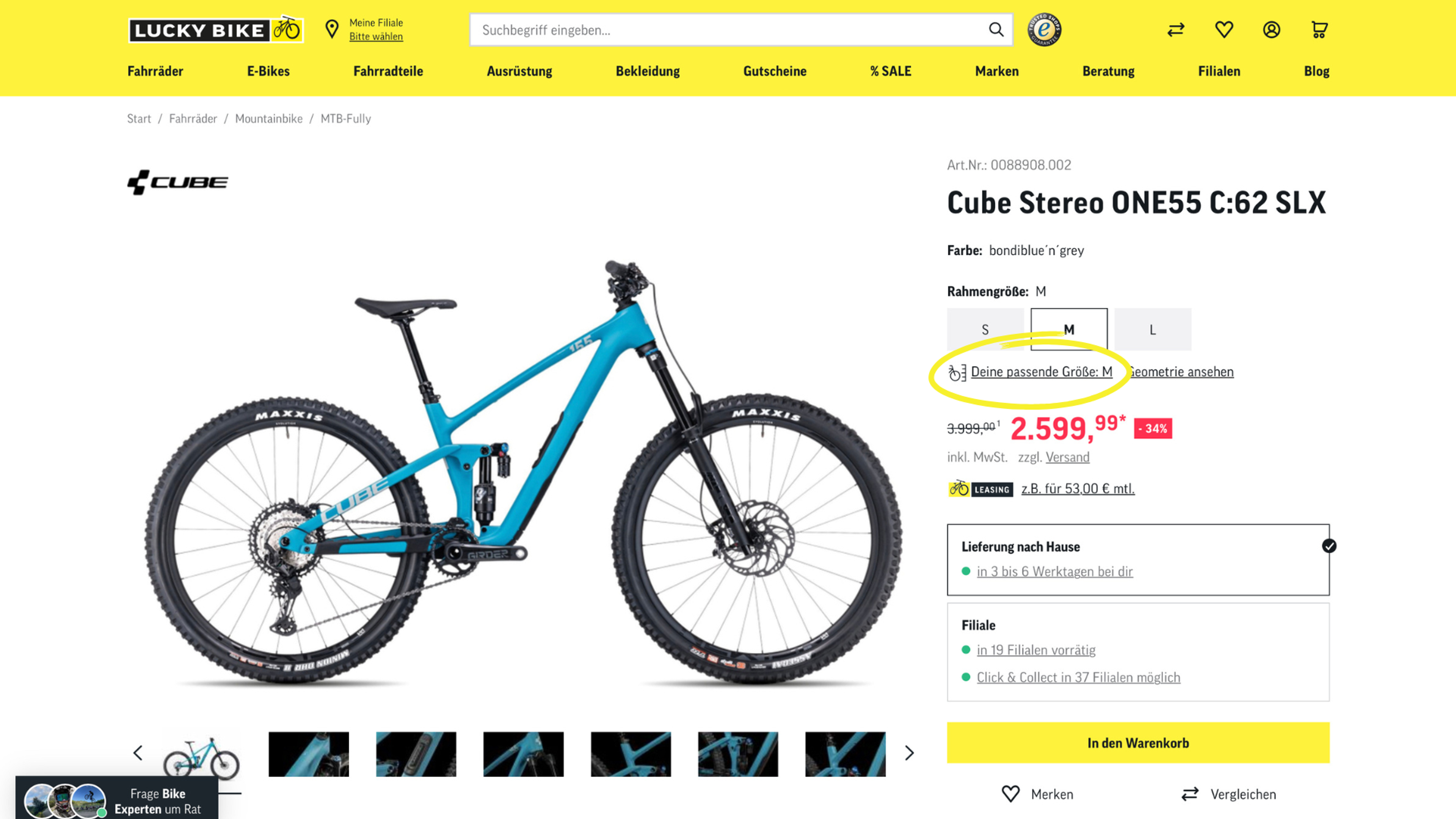
Sergej: Our key performance indicators don't show any drastic effects, such as a halving of the return rate. Incorrect orders due to wrong sizes do occur, but they aren't a massive problem. In my view, something else is more important: online sizing is a hygiene factor. It's not a single feature that changes everything, but rather part of the entire customer journey.
The issue of frame size contributes significantly to security and trust. When customers feel understood and realize that their data is being used effectively, a positive emotion arises – and this influences their purchasing decision. Precisely because retailers are easily replaceable, we have to differentiate ourselves through the customer experience. If customers are uncertain, they ultimately won't buy at all.
The overall package makes the difference
Many retailers offer online sizing. What else sets Lucky Bike apart?
Sergej: Objectively speaking, retailers often don't differ that much in their product range: workshops, brands, expertise – many claim that. In my view, the crucial factor is brand perception and how strongly customers resonate with the Lucky Bike brand.
Another point is our commitment to consciously curating our product range – we prefer a good selection to maximum breadth. We also focus on cross-selling: for us, the cycling experience doesn't begin with the purchase, but afterward. Accessories, add-ons, workshop service, and long-term support are all part of it for us.
Paul, what's your perspective?
Paul: I strongly believe in the sum of all our efforts. Even if everything isn't perfect, it's important to authentically demonstrate a commitment to continuous improvement and a desire to offer customers a better experience.
This is noticed and appreciated – and we see that reflected in the usage of our services.
 Photo: Lucky Bike
Integration of online retail and brick-and-mortar stores
How can online sizing and in-store sizing work together from your perspective?
Paul: For us, online and in-store sizing aren't separate; they're closely integrated. A large proportion of our orders are processed through Click & Collect and then connected to our stores.
We also see that the sizing tools on luckybike.de are frequently used in-store – by customers who are physically present in the store and have researched online beforehand. Online sizing helps them pre-select the correct size and then facilitates the in-store consultation.
 Photo: Lucky Bike
A glimpse into the future of bicycle e-commerce
How do you think bicycle e-commerce will develop in the coming years?
Sergej: The market is becoming more complex: New players, especially from the leasing and secondary markets, are entering the market. At the same time, enormous budgets are being invested in infrastructure and marketing.
I'm convinced that data literacy will be the decisive factor. Those who have control over their data and use it effectively—for example, for targeted cross-selling at the right time—will have the advantage.
The same applies to manufacturers: Brands with good, usable data will become more attractive to retailers. Brands without data will lose relevance in the long run.
Smartfit sizing solutions for your business as well?!