E-Commerce: When Is the Right Time to Offer Sizing Support?
Size chart, widget or personal consultation? Find out which sizing option works best at each stage of the online purchasing journey.

Thomas Hahn
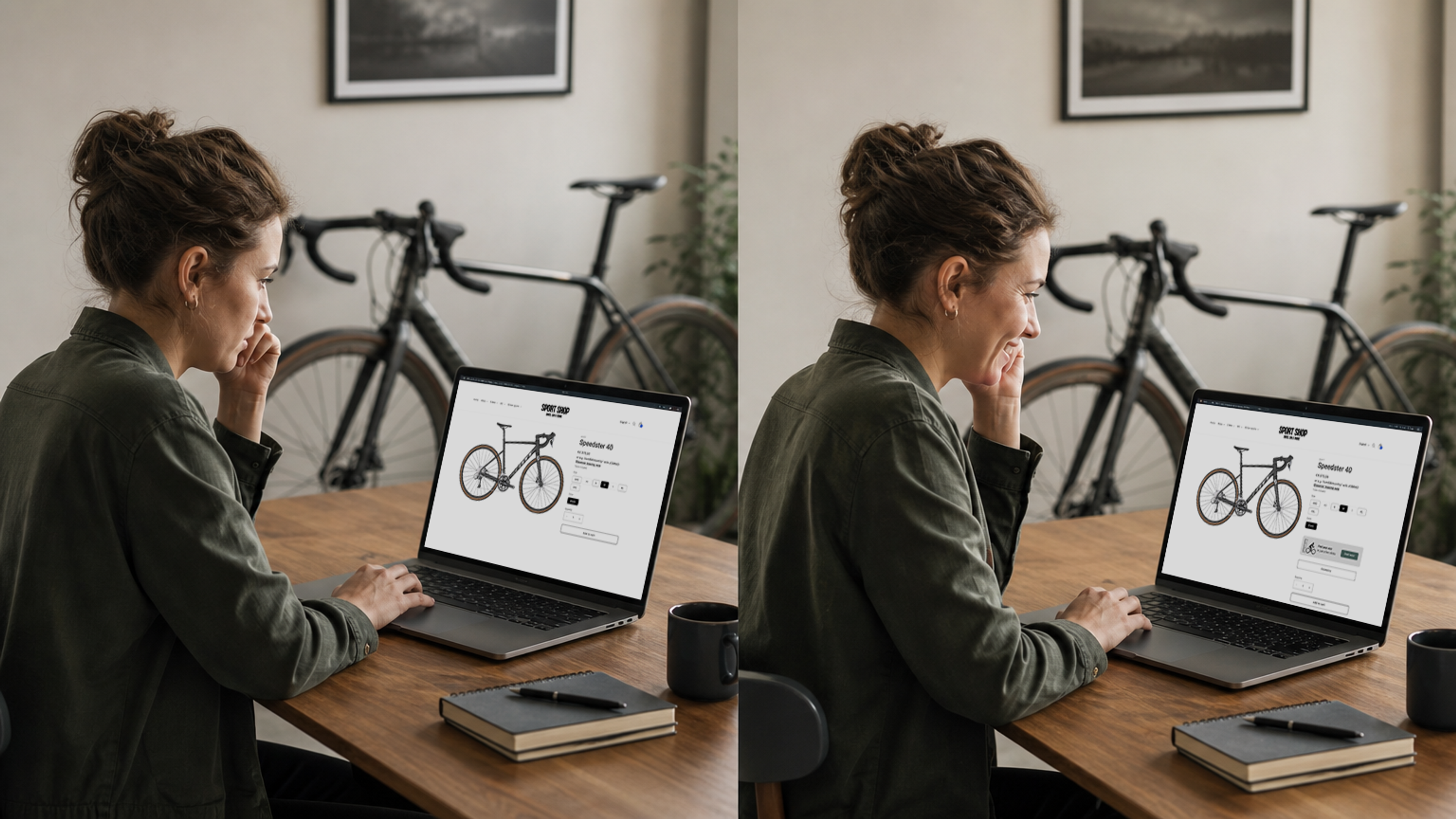 Parts of the picture AI-generated
What You’ll Learn in This Article
- Why sizing is not just a feature, but an offering with a specific window of opportunity
- The four levels of sizing support in e-commerce—from a size chart to a personal consultation
- Which sizing option has the greatest impact at each stage of the purchasing process
- Why the moment after placing an order can determine whether a customer returns the bike or is satisfied with their purchase
- How the investment in sizing solutions can pay off economically
Comparing two online shops in the same product category can reveal major differences in sales performance. There may be various reasons for this, such as different marketing strategies or approaches to targeting customers. One factor that is often overlooked, however, is how a shop handles a simple question: “Will this actually fit the customer?” In the bike and sporting goods industry, the answer to this question can influence a purchase more than price or delivery time—and in many online shops, it is only addressed after the buying decision has already been made or abandoned. That is exactly where this article comes in.
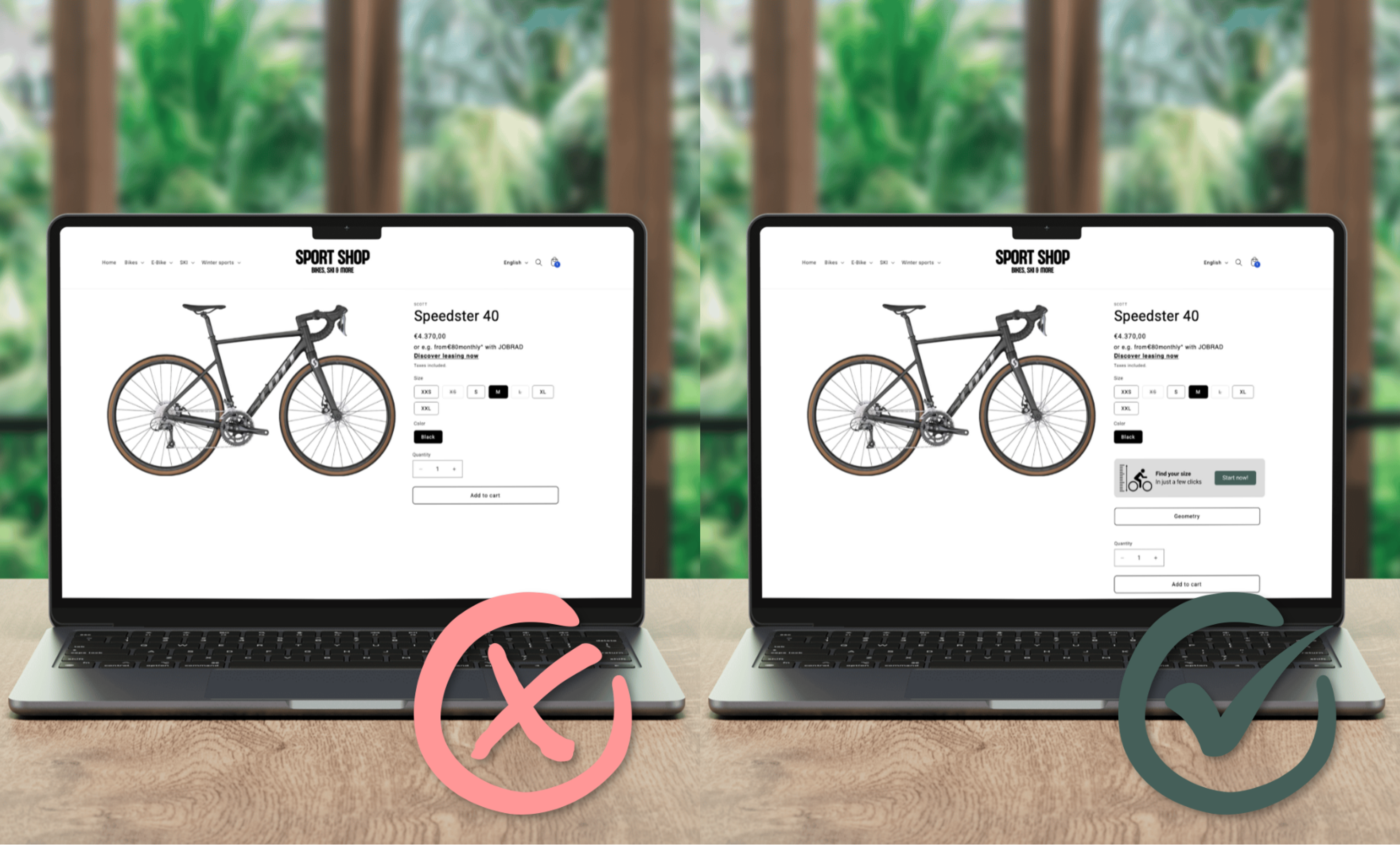
The key message is simple: sizing is not a feature that you add once and then tick off your list. It is an offering. And an offering only works if it is visible at the exact moment someone actually needs it. If sizing advice is hidden behind a small link in the footer, it may technically be part of the shop—but it is unlikely to be top of mind for customers. The fundamental question when integrating sizing solutions into your online shop is therefore: Which sizing option should you offer at which stage of the purchasing process? After all, there are several levels between a static size chart and individual consultation—each with very different strengths.
The Four Levels of Sizing in E-Commerce
Before looking at timing, it is worth taking a closer look at the options available. In bike and sporting goods e-commerce, four main forms of sizing support have become established:
- The size chart: static, passive and free. It provides data, but not a decision—customers have to interpret the information themselves.
- The interactive size recommendation: A widget asks for a few body measurements and recommends a specific size for a specific model. Data becomes a clear recommendation.
- Guided product selection: Here, size comes at the beginning of the journey rather than the end. Instead of asking, “Does this bike fit me?”, the question becomes, “Which bikes fit me?”
- Personal consultation: Chat, video call or an appointment at a specialist retailer. More resource-intensive, but often the deciding factor when it comes to high-value bikes.
Important: None of these levels replaces the others. What matters is which one becomes visible at which point in the purchasing journey.
Phase 1: Exploration – the Model Has Not Been Chosen Yet
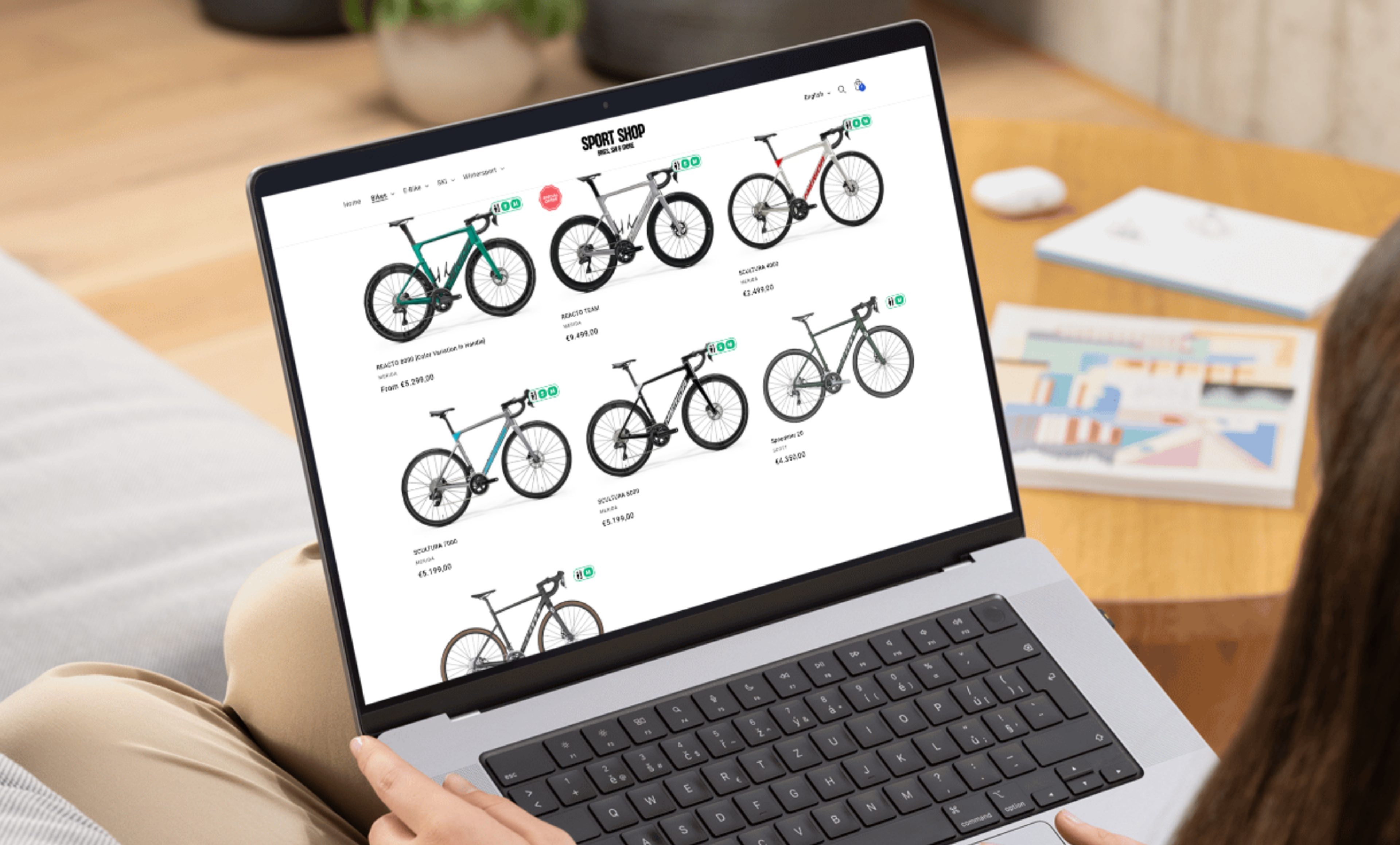
At the beginning of the customer journey, the question of size is still abstract. Someone who is still deciding between a gravel bike and a trekking bike is not thinking in centimetres. Even at this stage, however, sizing can be used effectively—as a navigation tool. An optional filter such as “Show only bikes in my size” prevents customers from becoming interested in a model that is not even available in the right size.
By the way: This early sizing step should never be mandatory. Asking for body measurements before genuine interest has developed creates a barrier rather than providing support.
Phase 2: Comparison – Two or Three Models on the Shortlist
Now things become more specific—and this is where sizing has the greatest impact. The comparison phase is where the real uncertainty often begins: with Brand A, for example, size M might be the right choice, while Brand B recommends an L according to its size chart. What that means for the riding position, however, is rarely explained.
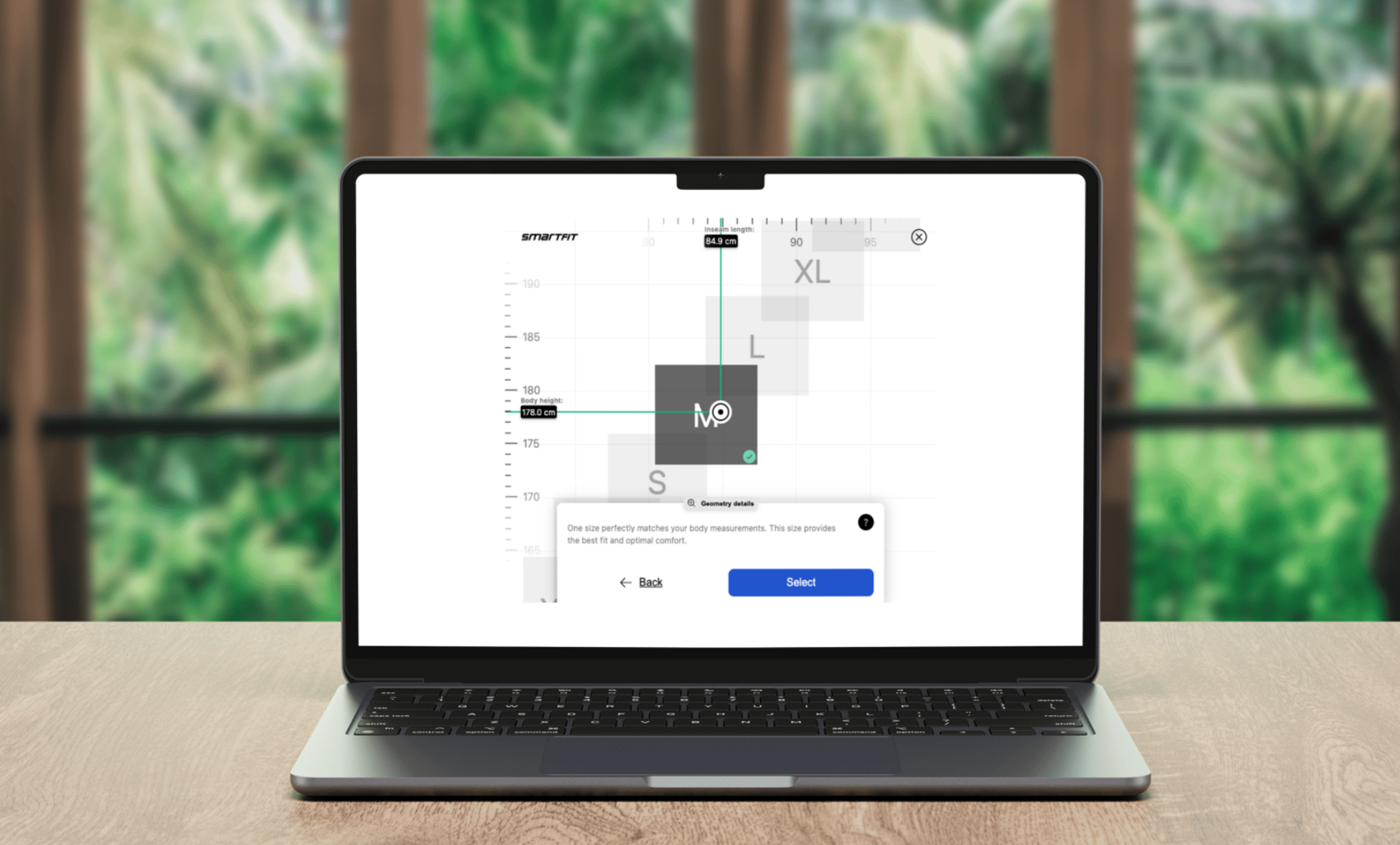
This is exactly where an interactive recommendation proves its value. The Smartfit Sizing Widget compares the customer’s body measurements with the geometry data of the respective model and recommends the appropriate size for that specific bike—independently of brand or model. This makes it possible to compare bikes that would never be directly comparable based on manufacturer size charts alone.
Good to know: The value of this type of guidance lies not only in the recommended size itself, but also in the context it provides. Information such as “You sit right in the middle of size M for this model, but closer to the edge of the size range for that one” answers exactly the question that would otherwise remain unresolved during the comparison.
Phase 3: Decision – Cart and Checkout
By the time customers reach the cart, the purchase decision has usually been made. This means that anyone encountering the question of size for the first time at this stage is unlikely to perceive it as a helpful service. Instead, many customers may see it as an obstacle. The logic for this stage of the sales process is therefore different: the role of sizing here is to confirm the decision rather than provide further guidance.
In practice, this means: A brief reminder of the recommendation already determined is enough—for example, “Recommended size for 1.78 m: M.” What you should avoid, however, are open-ended questions just before payment. Uncertainty introduced during checkout rarely leads customers to choose a different size—it is far more likely to result in an abandoned purchase.
Phase 4: After the Purchase – the Overlooked Moment
Several days often pass between ordering and delivery when it comes to bikes and other sporting goods such as skis. That gives customers plenty of time to start questioning their decision again. This is exactly where some returns originate—even though the sale may already have seemed secure.
 AI-generated
A short paragraph in the order confirmation email explaining the sizing recommendation can help prevent this. An even stronger approach is to offer a clear next step: for example, a note about fine-tuning the setup at a specialist retailer or booking a bike fitting with a partner using a Smartfit in-store solution. This can turn a potential return into a valuable second customer touchpoint.
What Sizing Support Can Cost
That leaves the commercial question: how broadly should these sizing options be offered? A look at real-world figures helps put the investment into perspective. Bike brand Waldbike estimates the cost of a single bike return at at least €300 when logistics, staff time and loss of value are taken into account. By comparison, one use of Smartfit Online Sizing costs around eight cents on average. Mathematically, 3,750 sizing sessions therefore cost the equivalent of just one avoided return. This ratio helps explain why holding back on sizing is rarely the right strategy. Sizing support should be highly visible rather than used sparingly—the expensive part of the equation is not the consultation itself, but the absence of it.
Conclusion: The Right Sizing Support at the Right Time
Back to the two online shops from the beginning: in the end, the difference comes down to how the sales journey is structured. In one shop, sizing support appears exactly when the question arises. In the other, it may be available somewhere—but customers never come across it.
In short, a sizing offer is only as effective as its timing. By matching each of the four phases of the purchasing process with the right format—navigation during exploration, recommendation during comparison, confirmation at the decision stage and follow-up after the purchase—you can reduce uncertainty exactly where it arises.The result: fewer abandoned purchases, fewer returns and customers who start their cycling or sports season with the right product.
 AI-generated