Bike Sizing in Sales Consultations: 5 Situations Where Retailers Benefit
From an uncertain first-time purchase to successful upselling: these five sales situations show how smart bike sizing can pay off for retailers.

Thomas Hahn
- Das lernst du in diesem Artikel
- Warum die Rahmengröße fast immer der erste kritische Punkt im
Verkaufsgespräch ist - Wie du mit objektiven Empfehlungen vom ersten Moment an Vertrauen aufbaust
- Wie du auch bei nicht verfügbaren Wunschgrößen souverän und glaubwürdig
berätst - Warum dir Sizing hilft, wenn Kund:innen genau zwischen zwei Größen stehen
- Wie aus einer Größenempfehlung ganz organisch ein Zusatzverkauf wird
It’s Saturday morning, the shop is busy, the phone is ringing in the repair shop—and standing in front of you is a customer looking to buy a new bike. The challenge: they do not know which frame size they need. Moments like these can determine whether a consultation leads to a sale or uncertainty brings the process to a halt. Frame size is almost always the first stumbling block: it requires explanation, varies from brand to brand and cannot simply be determined off the cuff.
That is why good bike sizing is much more than a chart on the wall. It is a tool that makes sales consultations easier by building trust, shortening discussions and setting you apart from the competition. The following five situations show exactly where precise sizing can deliver real value in your day-to-day sales process.
1. The Customer Is a First-Time Buyer
Every bike shop sees them: customers buying a high-quality bike for the first time who need clear guidance when it comes to frame size. Inseam length, saddle height, geometry—for many people, it can feel like a closed book. Relying on experience and visual judgement may work, but it is not always reliable. There is another issue too: estimated sizes are difficult for customers to understand and do little to reinforce your professional expertise.
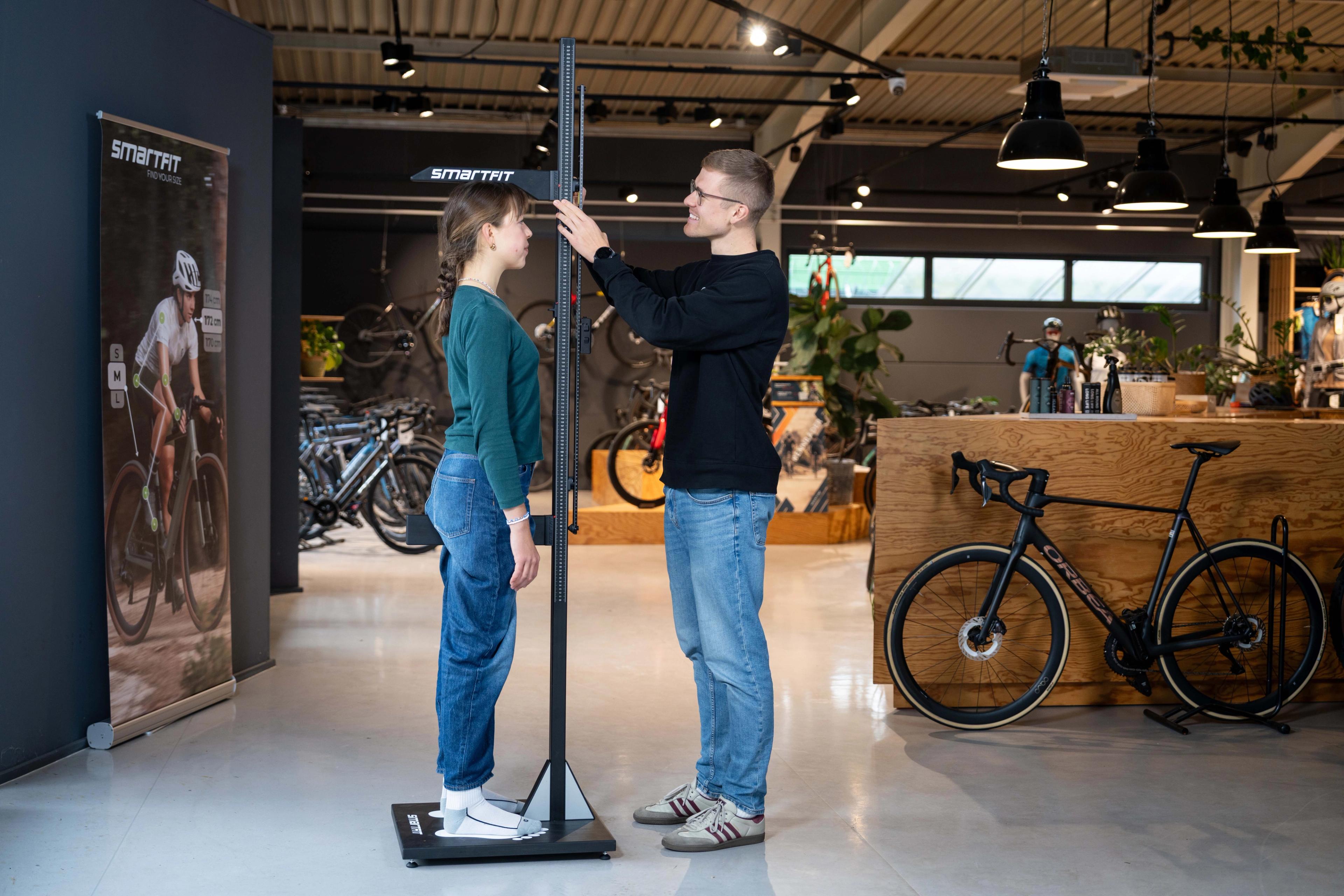
A sizing system changes the dynamic. Instead of estimating, you take objective measurements and use them to recommend a clearly defined size. This immediately removes the customer’s biggest uncertainty—and saves you from having to justify every recommendation at length. Your advantage: you begin the conversation with a solid, evidence-based foundation, building trust from the very first minute.

2. The Preferred Model Is Not Available in the Right Frame Size
This is a common scenario: the customer has done their research online, comes into the shop with a specific model in mind—and the size they believe they need is unavailable. It is a classic dead end that can quickly cost you the sale. Simply recommending the next size up may come across as a compromise rather than a professional solution.
This is where brand-independent sizing proves its value. With an in-store Smartfit system, you can determine the right size across different models and manufacturers, allowing you to recommend suitable alternatives with confidence—such as another model, a different brand or a bike with comparable geometry. Your recommendation is not driven by limited availability, but by objective data.
Good to know: this approach helps protect your credibility. “Just take this size instead” becomes “Based on your measurements, this model may actually suit you even better.” What could have ended without a purchase can instead result in a confident and satisfied customer.
3. The Customer Falls Right Between Two Sizes
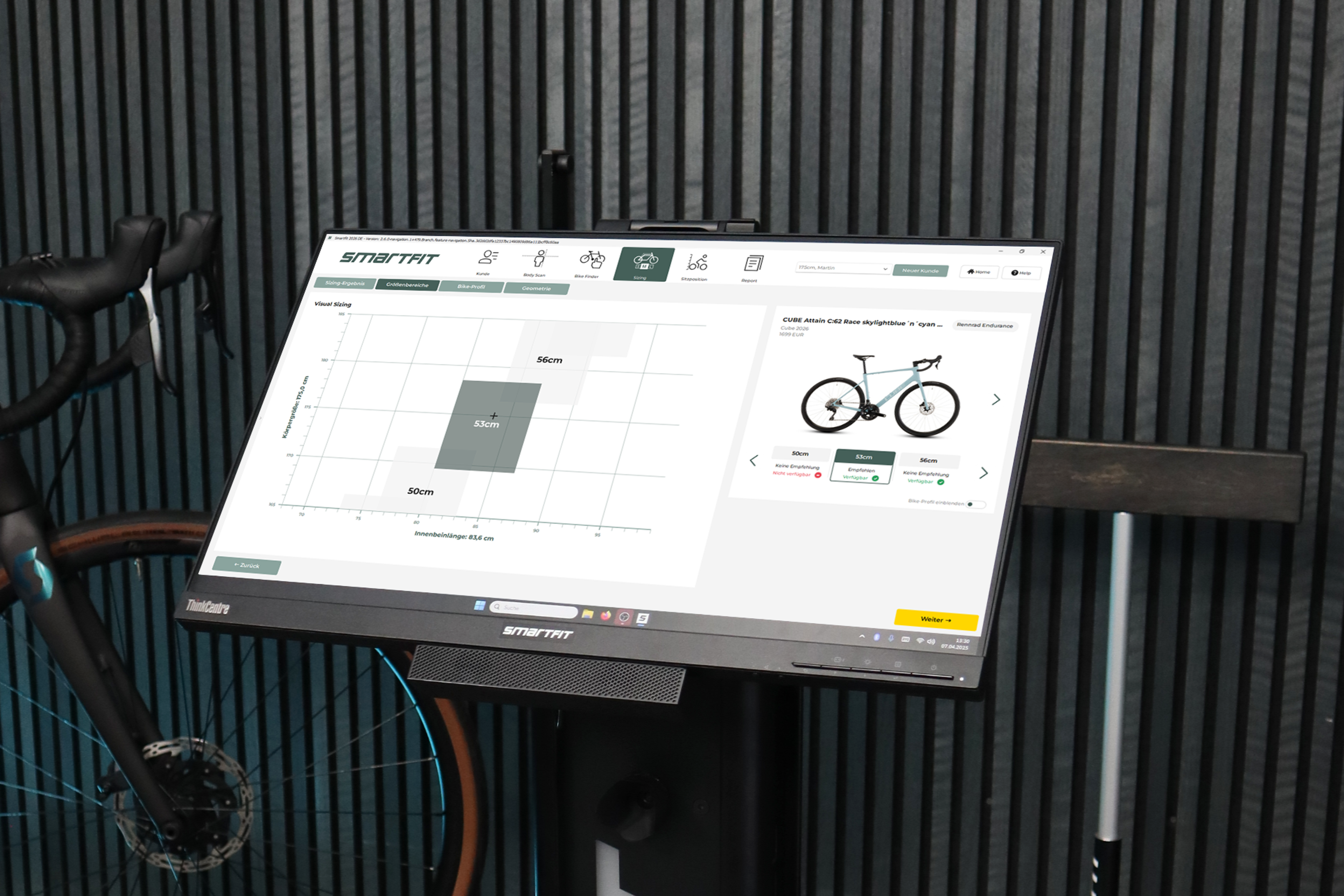
Do I need a 53 or a 56 cm frame? Many customers ask themselves this question, and it often leads to lengthy back-and-forth during the sales consultation. Both sizes may work, both have their advantages and disadvantages, and in the end, the decision is often based on gut feeling. That is unsatisfying for the customer and time-consuming for you.
Modern sizing turns this stalemate into a clear and transparent decision-making process. Tools such as the Smartfit software visually show whether someone falls in the middle of a size range or closer to its limit—and which neighbouring size could also be a realistic option. This allows you to explain what the smaller size offers, such as a sportier and more agile ride, and what the larger size provides, such as greater comfort and stability.
A useful tip: link your recommendation to the customer’s riding style. This turns a number into a decision that feels right for the individual—and means you no longer have to rely on guesswork.
4. The Customer Refers to the Manufacturer’s Size Chart
More and more customers research online before making a purchase and arrive at the shop with a fixed idea of the size they need—usually based on a general manufacturer’s size chart that only considers body height. The problem is that these charts often overlook body proportions, intended use and the sometimes significant differences between bike geometries. If your assessment differs from the chart, you may quickly find yourself having to justify your recommendation.
Objective sizing allows you to handle this conversation with confidence. Rather than simply contradicting the customer, you provide a more precise data basis that takes both body proportions and intended use into account. Online tools such as the Smartfit Sizing Widget can also help customers arrive at the shop better prepared.
The key point is not to prove who is right. It is to make the better decision visible and understandable. This positions you as a specialist retailer offering genuine added value—not merely as a collection point for decisions made online.
5. The Size Recommendation Leads to Additional Sales
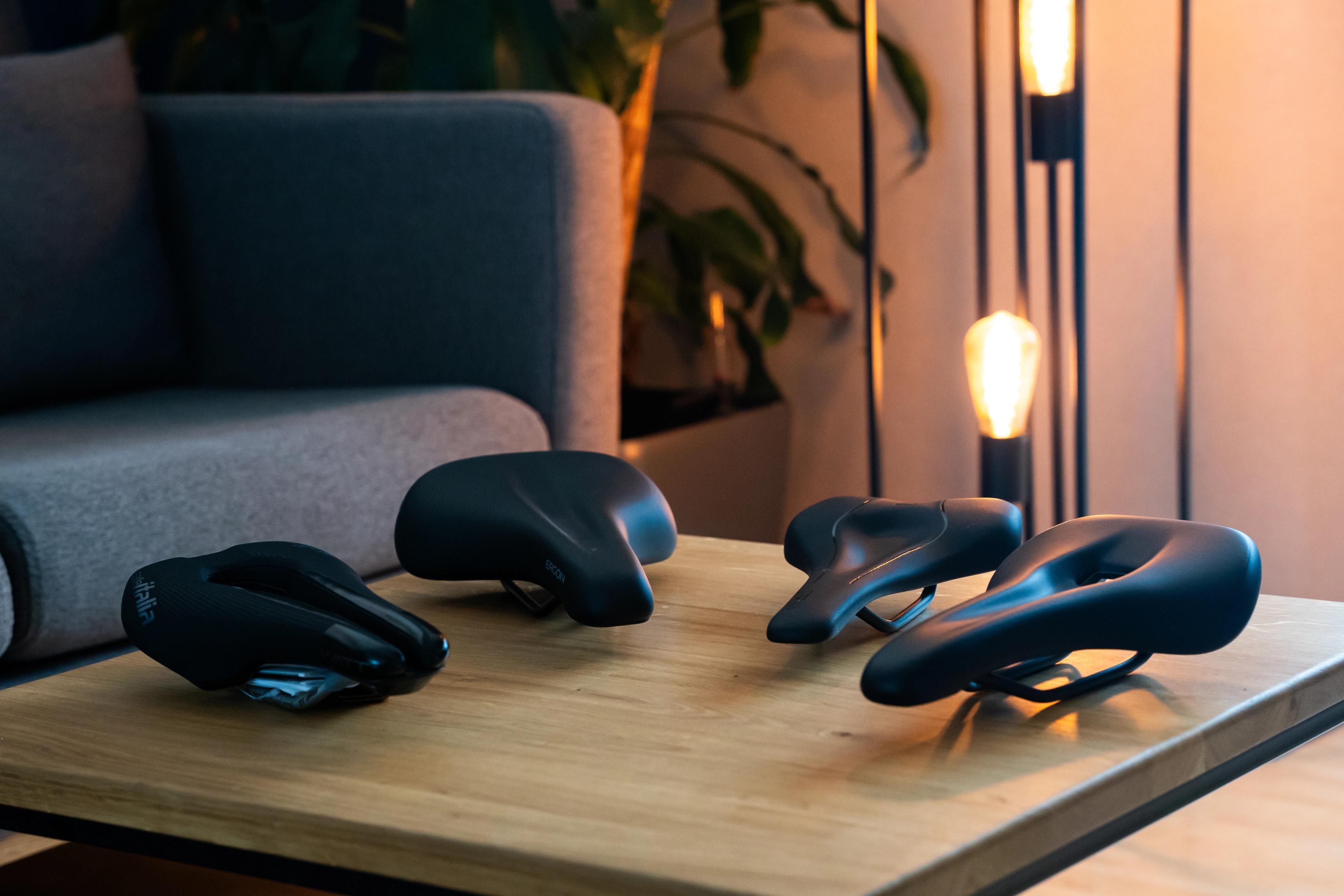
Once the right size has been identified, the conversation is far from over—quite the opposite. This is exactly when the door opens to relevant additional sales: an ergonomic saddle suited to the riding position, comfortable grips to help prevent numb hands, fine-tuning the stem and spacer setup, or even a complete bike fitting.
Your advantage: because these recommendations logically build on the sizing consultation, they do not feel forced. The result is a higher basket value without giving the impression of selling at any cost. You provide a complete consultation—and the customer leaves with a bike that truly fits.
Bike Sizing in Sales Consultations: Your Benefits at a Glance
Back to that busy Saturday morning: with a precise sizing tool at your side, an uncertain customer no longer becomes a source of stress, but a predictable sales opportunity. You begin with trust instead of debate, provide confident advice even when availability is limited, resolve questions about the right size clearly and turn the consultation naturally into additional sales.
In short, good sizing makes you faster and more credible—and that is one of your strongest advantages when competing with online retailers. Those who use Smartfit both online and in-store already have the right tools at hand. Because ultimately, recommending the right size with confidence means selling more than just a bike—it means giving the customer peace of mind.