Trust Instead of Tables: Why Bike Size Charts Often Fall Short
Why size charts reach their limits when it comes to selling bikes – and what really gives customers confidence during the sales consultation. Find out in this article.

Thomas Hahn
 AI-generated
What you'll learn in this article
- Why two people of the same height don't necessarily need the same frame size
- How different measurement methods used by manufacturers make bike sizes difficult to compare
- Why stack and reach tell you more about bike fit than seat tube length alone
- What recommending the wrong size can actually cost you in sales
- How to turn a discussion about the manufacturer's size chart into a confident, professional consultation
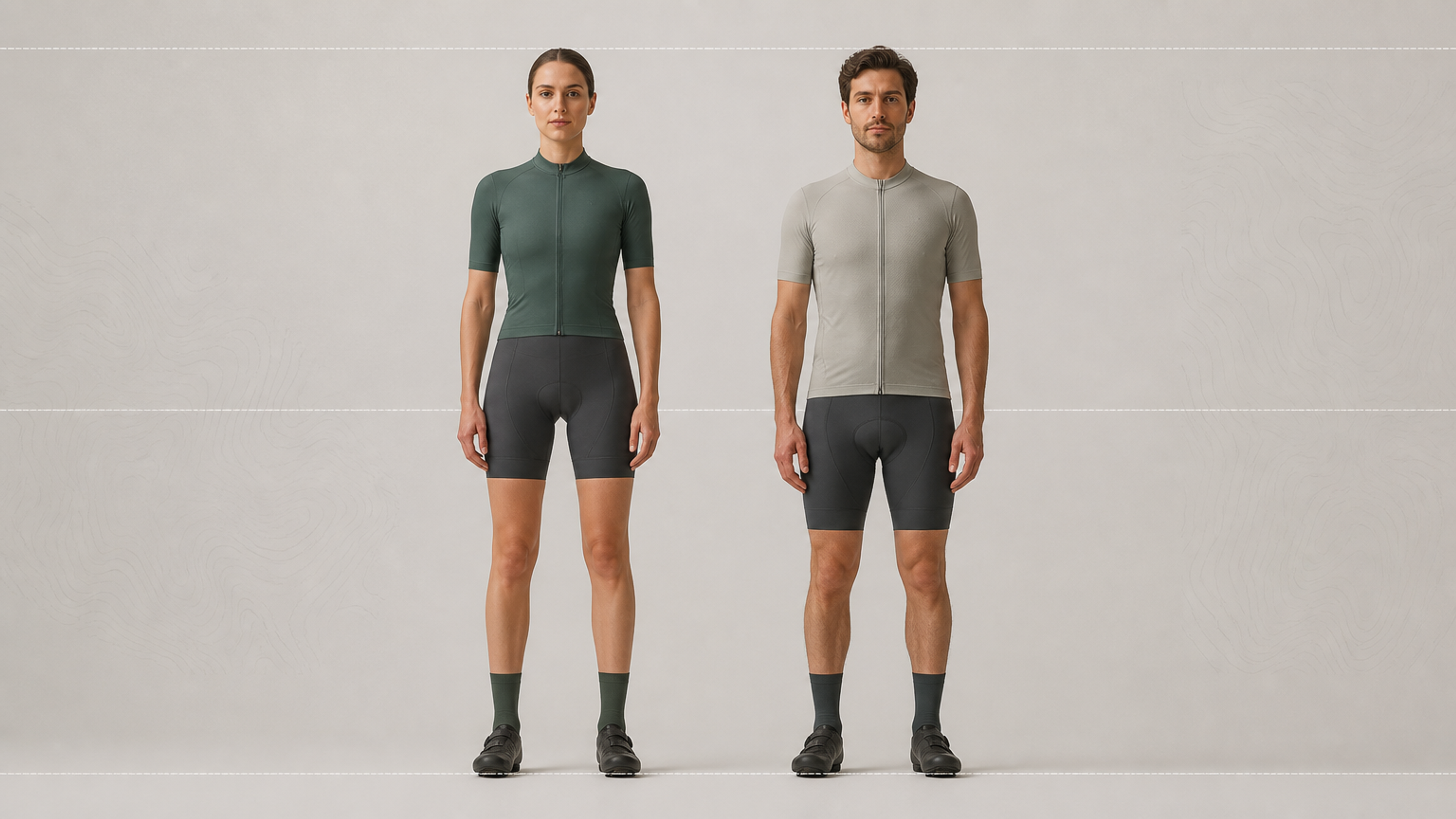
Two customers, one afternoon, the same number: 1.80 metres. Both are interested in the same road bike, both fall into the same row of the manufacturer’s size chart, and both receive the same recommendation: frame size 56. But three weeks later, the difference becomes clear. While one customer is delighted with the bike, the other is back in the shop because they regularly experience neck pain on longer rides.
The problem is that the size chart used as the basis for the sales consultation did not tell the whole story – or at least did not take all aspects of bike sizing into account. Customer number one has an inseam of 88 centimetres, while customer number two measures just 82 centimetres despite being the same height. The latter, however, has a significantly longer torso. The takeaway: two people who may appear to need the same frame size at first glance can have very different requirements when it comes to bike geometry.
This is exactly where the fundamental limitation of traditional size charts lies: they rely on a single input value and therefore provide an answer based on an average person who, in reality, does not exist. That may be enough for an initial guideline. But when it comes to making a confident purchase decision – especially for bikes costing several thousand euros – it is often simply not enough.
A Word of Caution: The Frame Size Dilemma
Let’s start at the beginning: traditional frame size usually refers to the length of the seat tube. But this is where the inconsistencies already begin. One manufacturer measures from the centre of the bottom bracket to the centre of the top tube, while another measures to the top edge of the seat tube. On top of that, different units are used – centimetres for road bikes, inches for mountain bikes, and sizes from S to XL for many other models. In short, frame sizes are rarely directly comparable.
 AI-generated
This is even more true because modern bike frames often feature a strongly sloping top tube. As a result, seat tube length tells us less and less about the actual riding position. Stack – the vertical distance from the bottom bracket to the top of the head tube – and reach – the horizontal distance between the bottom bracket and the head tube – are much more meaningful. Unlike traditional frame sizes, these two values can be compared across different brands.
What Size Charts Can Do – and Where They Fall Short
Despite these obvious limitations, size charts are not inherently bad. They are quick, free, and for many customers they are the first point of contact with bike sizing at all. Someone who is 1.60 metres tall can reliably rule out a size 60 frame with the help of a size chart. And someone who is 1.80 metres tall will already know before entering the shop that a size 54 frame is very likely to be too small. As a rough guideline, size charts therefore serve their purpose.
The problem starts when this initial guideline turns into a definitive recommendation. A chart with five rows simply cannot account for three key factors: it does not know the individual proportions of the rider, it does not know how the future dream bike will actually be used, and – as already mentioned – it cannot be reliably compared across brands. These are exactly the gaps that repeatedly come up during the sales consultation. The following deep dive makes this even clearer:
Challenge 1: Height Alone Tells Us Too Little About the Body
Height is a combined measurement. It does not tell us how that height is distributed across the legs, torso, and arms. Yet that is exactly what matters when determining which bike geometry will suit a rider. Two people who are both 1.80 metres tall can easily have inseam measurements that differ by ten centimetres or more.
 KI-generiert
The consequences are very real: someone with long legs and a relatively short torso can quickly feel too stretched out on a frame that is supposedly the “right” size according to the chart. Conversely, a rider with a longer torso and shorter legs may find the same recommendation too compact. What makes this sizing dilemma even more difficult is that these issues rarely become apparent during a short test ride around the block. They usually only show up after the first longer rides – exactly when an exchange or return becomes significantly more complicated.
Challenge 2: Every Brand Measures Differently
A size M is not a standard – it is simply a label. What one brand calls an M may be an S or an L at another, and even within the same brand, an endurance road bike and an aero model can differ significantly in terms of stack and reach. A size chart therefore only reflects the specific sizing logic of a single manufacturer. As soon as your customers start comparing models from different brands – which they almost always do online – these size labels lose their comparability.
By the way: This becomes particularly tricky with bikes that are only available in three or four sizes. The wider the gaps between individual frame sizes, the bigger the jumps from one size to the next – and the more often customers end up falling right in between.
Challenge 3: Intended Use Is Missing Entirely
A size chart only tells you which size mathematically corresponds to a rider’s height – not which size best suits their riding style. Yet this can make a significant difference: a smaller frame tends to create a sportier, more agile riding position, while a larger frame generally offers a more upright position and greater stability. Someone who commutes ten kilometres to work every day therefore needs a different recommendation from someone who rides long-distance road cycling events – even if their body measurements are identical.
 Photo: Philip Carneiro
Other factors also come into play, such as flexibility, previous riding experience, or physical limitations. None of these are reflected in a traditional size chart. But all of them can determine whether a bike still feels comfortable after 60 kilometres – or not.
What a Lack of Confidence Can Cost in Sales
For you as a retailer, this has very real consequences. If customers come into the shop with a size from a manufacturer’s chart already in mind and your recommendation differs from it, you can quickly find yourself having to justify your assessment. Without a solid data basis, the conversation can easily turn into a debate about gut feeling – and that rarely leaves anyone convinced.
In e-commerce, that conversation does not happen at all. There, uncertainty can lead directly to abandoned purchases or customers ordering multiple sizes. A look at real-world figures shows just how costly this can become: bike brand Waldbike estimates the cost of a single bike return at at least €300 when logistics, staff time, and loss of value are taken into account. Every avoidable sizing error therefore becomes a direct cost factor in your calculations.
From Size Charts to Recommendations Customers Can Trust
The solution is not to get rid of size charts altogether, but to complement them with something more precise: a recommendation that combines multiple body measurements, intended use, and the actual geometry of the specific bike model.
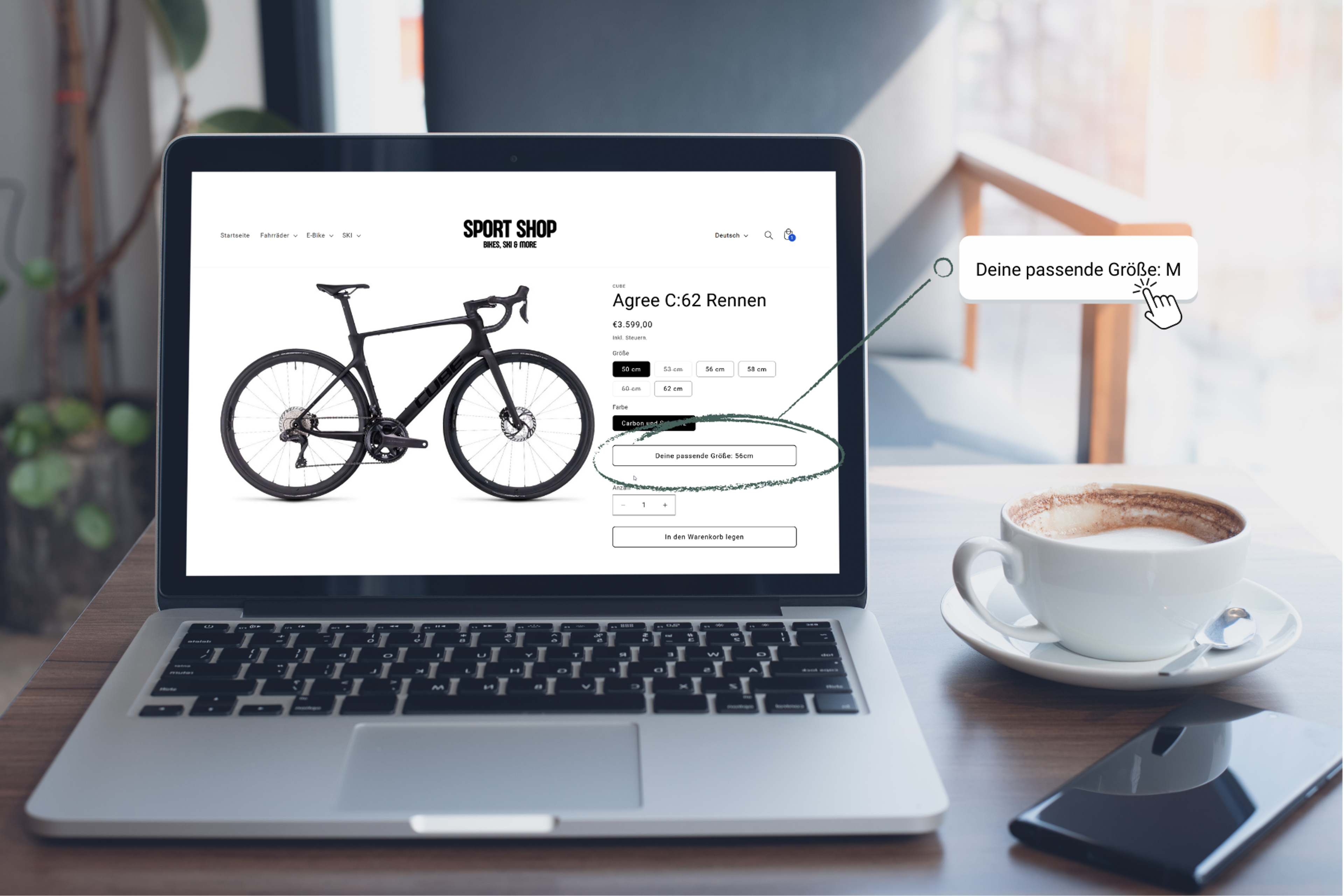
In bike shops, this is where the Smartfit In-Store Solutions come in: customers can be measured in just a few simple steps, and the system uses the results to calculate the right frame size – independently of brand or model. Online, the Smartfit Sizing Widget applies the same logic directly on the product page of the respective online shop.
 Created with Canva
What matters is not only the recommendation itself, but also how it is presented. That is why the Smartfit software does more than display a single number. It also shows where a person falls within a given size range: right in the middle or closer to the edge, which alternative size could work, and what the respective choice would mean for the riding position. In this way, a recommendation becomes a transparent decision framework – and that is exactly what builds trust.
Four Steps to Move Beyond the Size-Chart Debate
- Don’t contradict the chart: Describe it for what it is – a useful starting point, not a precise measurement.
- Expand the data basis: Measure inseam, torso length, and arm length instead of estimating. Objective data resolves discussions more quickly than experience alone.
- Clarify intended use: Sporty or comfortable? Commuting, touring, or racing? The answer can often shift the recommendation by an entire size.
- Explain the result: Don’t just name the recommended size – also explain what choosing the alternative would mean in practical terms.
Conclusion: Trust Comes From Transparency
Let’s return to the two customers from the beginning, both 1.80 metres tall. With an objective measurement, they would never have received the same recommendation – and the neck pain on the longer ride might well have been avoided. That is the difference between a rough guideline and genuine consultation.
Size charts therefore remain a useful first step. But as the sole basis for deciding on a product that is meant to accompany someone for years, they are simply too imprecise. Retailers who combine individual body measurements, intended use, and model-specific geometry are less likely to recommend the wrong size – and are able to sell with much greater confidence. In short, trust does not come from a number, but from helping customers understand how that number was reached.