Bike Fitting in Retail: How the Right Tools Take Pressure Off Your Team
Staff shortages, time pressure, and inconsistent consultation quality: learn how bike fitting tools can make everyday work noticeably easier for your team in the bicycle retail business.

Thomas Hahn
 AI-generated | Created with ChatGPT
What you'll learn in this article
- Why consultation expertise becomes a risk when it only lives in a few people’s heads
- How digital tools standardize experience-based knowledge and make it available to the entire team
- How to onboard new employees faster without tying up your most experienced staff
- Why consistent consultation quality benefits both customers and your team
- How precise sizing can significantly reduce follow-up work, complaints, and returns
Almost every specialty bike shop has one: that one colleague who just “has a feel” for frame sizes. Years of experience, a trained eye, a sense for proportions — half the team relies on this person. Until they go on vacation, call in sick, or leave the company. Suddenly, consultation quality depends on experience that no one else can access in quite the same way. And that is exactly when it becomes clear how vulnerable a business can be when its most important know-how is stored in only a few people’s heads.
This dependency comes at a particularly challenging time for retailers. The shortage of skilled workers has long since reached the retail sector. According to the German Retail Association (HDE) and the German Competence Center for Securing Skilled Labor (KOFA), around 122,000 positions in German retail remained unfilled in 2024 — and as baby boomers continue to retire, the situation is likely to become even more critical. The advice-driven bicycle and sporting goods retail sectors feel this pressure twice over: selling bikes today means not only understanding the products, but also being able to explain ergonomics, geometry, and riding position.
In short: qualified staff are hard to find. That makes one question more important than ever: how can retailers support the employees they already have instead of overloading them? This is exactly where smart tools come in.
The Issue: When Consultation Quality Depends on Individual Expertise
Many specialty retailers still rely on a tape measure, experience, and gut feeling when it comes to bike size and riding position. And that can work — as long as experienced staff are available. But this knowledge is difficult to pass on, rarely documented, and therefore risky. When a key team member is unavailable, the quality of the consultation can noticeably decline. Conversations take longer, and the likelihood of misjudgments increases.
It becomes especially critical when an experienced employee changes jobs. A large share of that know-how simply walks out the door with them. On top of that, even the best specialist cannot advise three customers at the same time during peak hours. The result: longer wait times, frustration on both sides, and, in the worst case, a lost sale.
Bring Knowledge Into the System — Not Just Into the Expert’s Head
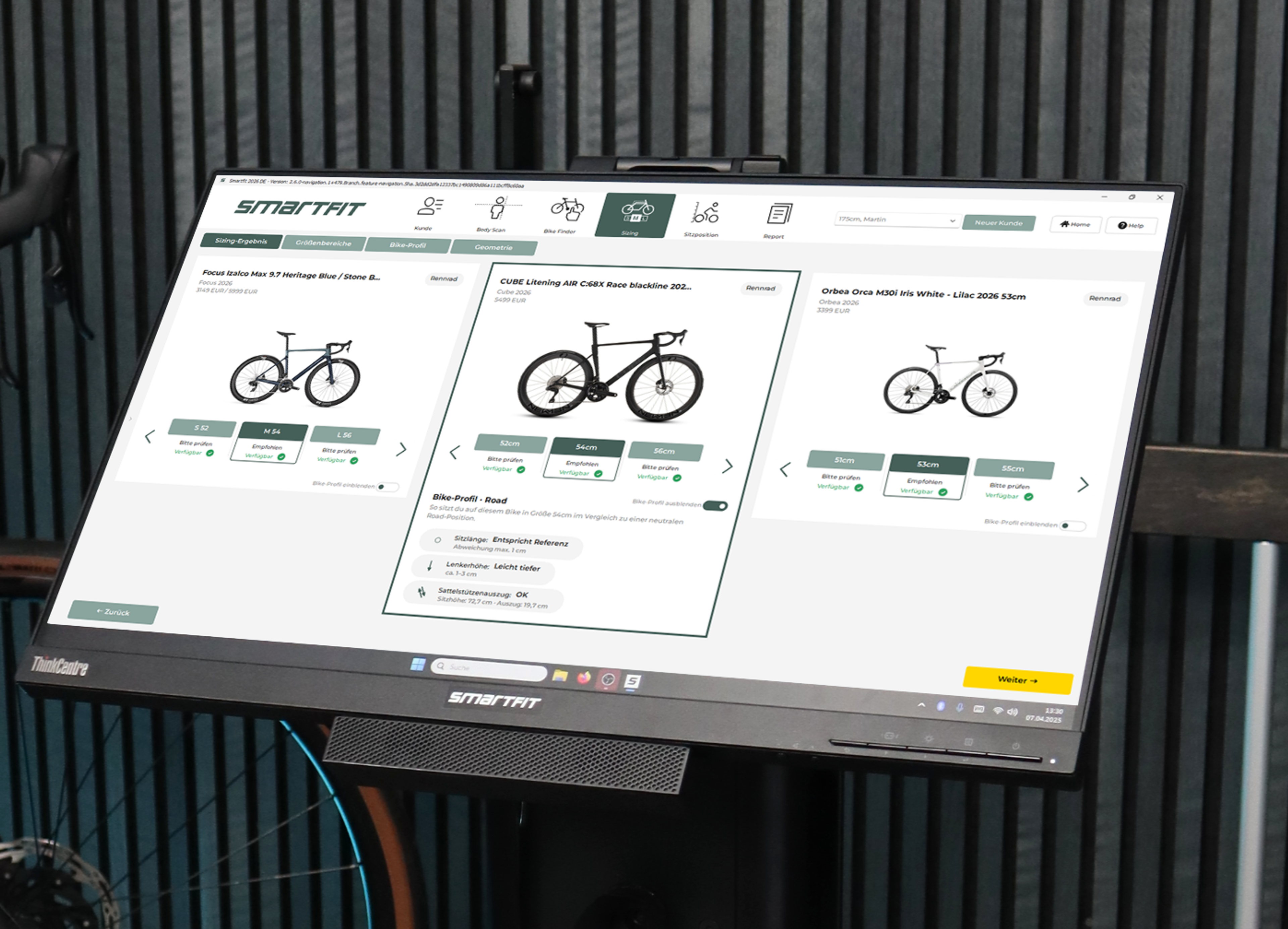
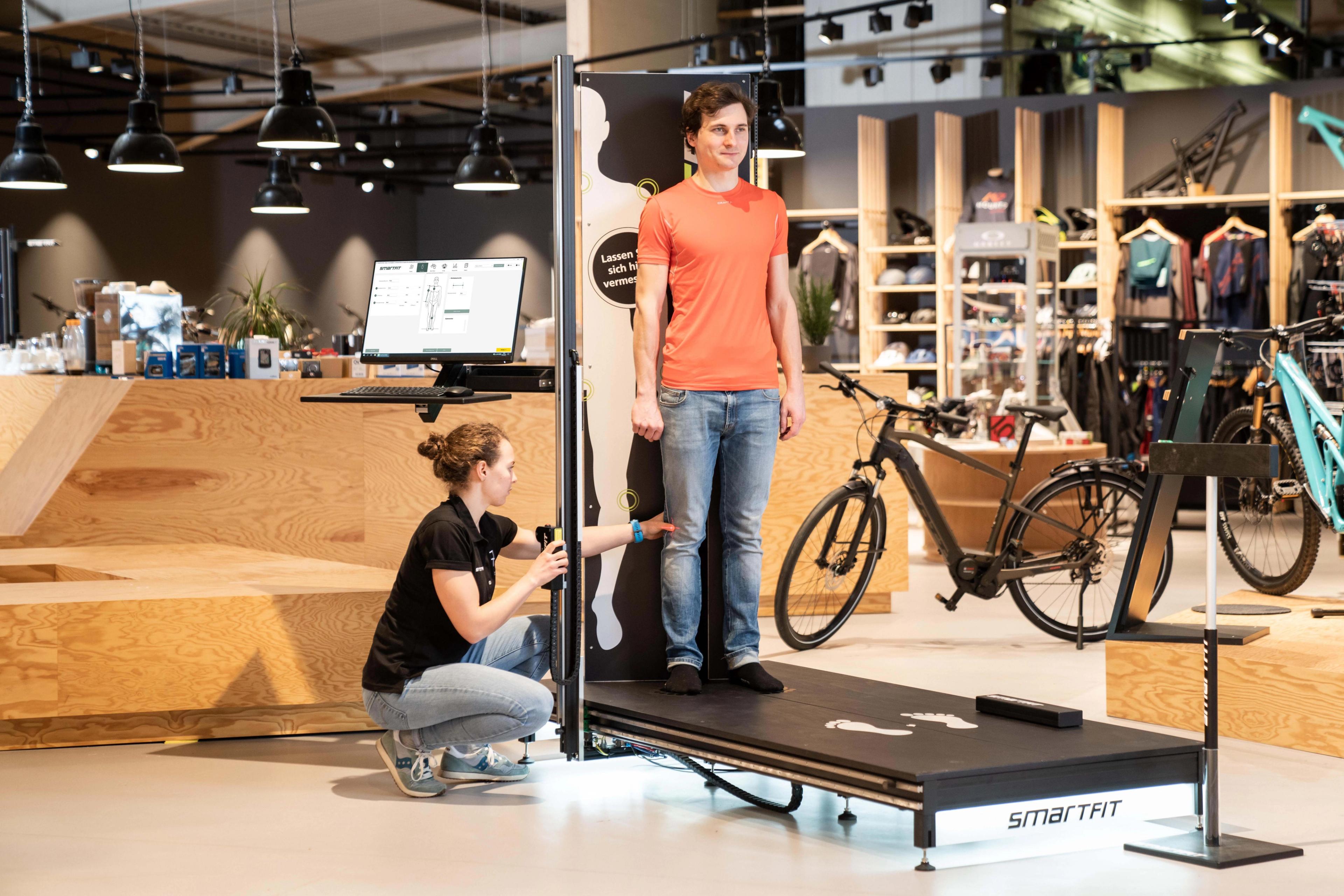
The most effective way to relieve pressure on your team is standardization. A digital sizing and fitting system, for example, does not keep ergonomics expertise locked away in individual minds. It makes that knowledge available directly within the tool. Body measurements are captured objectively, the right frame size is calculated, and the recommended riding position is presented in a clear, traceable way.
This turns implicit experience-based knowledge into a reproducible process that everyone on the team can access. Experienced colleagues remain highly valuable — but they are no longer the only bottleneck.
 Foto: Baschi Bender für Smartfit
Good to know: Tools like the Smartfit In-Store Solutions allow retailers to measure customers in just a few simple steps and calculate the right size independently of any specific brand or model. That means even less experienced team members can provide consistently high-quality advice — based on facts, not gut feeling.
Faster Onboarding: The Tool as a Built-In Coach
Onboarding new employees takes time — and in day-to-day retail, time is often in short supply. After all, anyone who first has to learn ergonomics, bike geometry, and the differences between brands over the course of several years will not be fully productive right away.
This is where digital systems can act like a built-in coach. Smartfit Software 3.0, for example, uses clear step-by-step guidance to lead even less experienced employees confidently through the consultation process: find the bike, determine the right size, and fine-tune the riding position.
The result: new team members can deliver reliable recommendations after only a short onboarding period, without being overwhelmed by technical terminology. At the same time, experienced staff are relieved from having to explain the same things over and over again.
Consistent Quality — Day After Day
Consultations based on gut feeling can vary: depending on someone’s mood that day, their level of experience, or the stress of a busy Saturday. Customers notice this — and for your brand, it can become a problem. Trust is built, in part, on reliability.
This is another key advantage of bike fitting tools in sales. A system-supported process helps ensure that every customer receives the same well-founded recommendation, no matter who is advising them.
That reduces the risk of customers buying the wrong bike and makes your service more predictable. It also benefits the team itself: when employees can rely on a dependable tool, they do not have to improvise in every consultation and are less likely to feel under pressure.
And there is another benefit: this consistency directly supports customer loyalty. When people receive advice that is both helpful and easy to understand, they are much more likely to come back.
Less Follow-Up Work, Fewer Complaints
Jede falsch eingeschätzte Größe erzeugt Folgeaufwand: Nachjustierungen, Every incorrectly assessed size creates extra work: adjustments, exchanges, costly returns in online retail, and follow-up questions that tie up customer service. This kind of follow-up work often creates invisible stress that adds even more pressure on your team. Precise sizing addresses exactly this issue by reducing wrong decisions from the start.
Online, self-service tools such as the Smartfit Sizing Widget can also help take pressure off the brick-and-mortar store. Customers can clarify the sizing question before they even visit and arrive better prepared. A useful rule of thumb applies here: every uncertainty you resolve upfront is one less potential complaint at the counter later on.
 Erstellt mit Canva
Bike Fitting in Retail: Support That Makes a Difference
Back to the colleague with the trained eye: in a store that relies on smart tools, their instinct is no longer a standalone advantage held by one person. Instead, it becomes part of a system that benefits the entire team.
Digital sizing and fitting solutions reduce pressure in day-to-day retail operations. They standardize knowledge, shorten onboarding, ensure consistent consultation quality, and reduce follow-up work.
Especially in times of staff shortages, this is more than just a nice bonus. It is what makes strong service possible even when staffing levels are tight.
In short: the right tools do not replace great employees. But they do make their work easier, more predictable, and ultimately more satisfying. And in the end, your customers feel that too.